Updated 30 October 2026. This guide was checked against official venue calendars, current event listings and Barcelona transport information. Programmes, age limits and entry conditions change, so always check the particular party before travelling.
Where should you go for techno in Barcelona in 2026? If you want a small club built around techno, start with MOOG. For bigger, sound-focused techno bookings, check INPUT High Fidelity Dance Club. Nitsa at Sala Apolo is a long-running electronic institution, while LAUT and Macarena reward visitors who prefer more intimate, adventurous rooms. Barcelona also has important mixed-programme options: Razzmatazz, particularly its Human nights, and the seasonal open-air La Terrrazza.
The best night is not always at the most famous venue. Barcelona’s scene stretches from hypnotic techno and electro to house, experimental electronics, harder dance music and festival-scale productions. Below, we separate dedicated clubs from broader venues and explain the practical differences.
Best Barcelona techno clubs at a glance
- MOOG: intimate, techno-led room with events every night in El Raval.
- INPUT: powerful Funktion-One system and bigger techno lineups in Poble Espanyol.
- Nitsa at Sala Apolo: established electronic club night, mixing techno, house and electro in Poble-sec.
- LAUT: small independent room for deeper and experimental electronic sessions in Poble-sec.
- Razzmatazz / Human: multi-room club; Human is its techno and adventurous-electronic programme in Poblenou.
- Macarena Club: compact room for house, minimal and techno in the Gothic Quarter.
- Les Enfants Brillants: intimate, music-led club with its own guest rules in El Raval.
- City Hall Barcelona: central club hosting regular techno and hard-dance nights, but not exclusively techno.
- Sala Upload: independent multi-genre venue with selected electronic nights inside Poble Espanyol.
- La Terrrazza: open-air electronic club operating seasonally, with a final 2026 Halloween event.
How we chose: Each venue has an identifiable current presence, but not every room is a techno specialist. A strong house or experimental booking may be more relevant to some readers than a generic hard-techno event; that is why our recommendations emphasize specific programmes and audiences rather than invented rankings.
1. MOOG: techno in a small room, every night
Best for: a compact, close-up techno dancefloor, especially on a weekday. Area: El Raval, Ciutat Vella.
MOOG is one of the most straightforward recommendations if your goal is a techno-focused club rather than a broad nightlife experience. Open since 1996, it maintains an unusually active calendar with DJ sessions every day of the year. The main room centres electronic dance music and techno while the Villarosa space follows a different musical direction. The appeal is proximity to the DJ and a room built for dancing, rather than spectacle.
The official calendar documents what that commitment looks like in late 2026. Jeff Mills and Uroz appeared on 28 October; upcoming dates list Anika Kunst, Paco Osuna and DJ Hell with Reka. Other evenings focus on residents such as Uroz and Rubén Seoane. These are concrete reasons to keep MOOG high on the list.
MOOG is small, and on a popular night that is a feature as much as a limitation. Buy tickets through its official channels, pay attention to the chosen date, and bring identification. A compact room can create an intense atmosphere without needing a vast warehouse or a major headline artist.
Address: Carrer de l’Arc del Teatre 3, 08002 Barcelona. Official MOOG events and tickets.

2. INPUT High Fidelity Dance Club: techno on a bigger soundsystem
Best for: contemporary techno lineups, high-impact sound and a larger, audiovisual club setting. Area: Poble Espanyol, Montjuïc.
INPUT is a different proposition from MOOG. It operates inside the Poble Espanyol complex and openly prioritizes sound quality, with a Funktion-One soundsystem and 360-degree LED presentation. That is supported by the venue’s own information and its current programme, rather than an unverified claim that it has the best sound in Barcelona.
October and November 2026 bookings include LUCIID, Quelza, Dubfire with Sciahri, Colin Benders with Beste Hira, and Kangding Ray with Kerrie. The variety matters: there is space for hard, stripped-back and experimental strains of techno, alongside other electronic bookings.
INPUT typically runs weekend and selected holiday events. The venue also publishes an inclusion and anti-discrimination policy, which visitors should respect. The Poble Espanyol complex contains multiple independent venues, so confirm that your ticket is specifically for INPUT and follow the stated entrance instructions.
Address: Avinguda de Francesc Ferrer i Guàrdia 13, Poble Espanyol, Barcelona. Official INPUT event calendar · Club and soundsystem information.

3. Nitsa Club at Sala Apolo: an enduring electronic-music institution
Best for: credible electronic bookings with a long local history, from deep techno to electro and house. Area: Poble-sec.
Nitsa was founded in 1993 and is one of Barcelona’s defining club programmes. It takes place at Sala Apolo, a much wider music venue that also hosts concerts and unrelated parties. Nitsa’s strength is the continuity of its electronic programming and the quality of the artists it brings through its rooms. This is not a promise that every Nitsa ticket buys an exclusively techno night.
The 31 October 2026 event features Oscar Mulero alongside DJ Fra and Sylvia, a clear techno-focused choice. But the previous Saturday featured Yung Prado’s house, electroclash and Latin-influenced selections, while the November programme includes an Overmono DJ set. Those contrasting bookings show why it is useful to follow the actual night rather than reducing Nitsa to a single genre.
Sala Apolo sometimes sells Nitsa and Astin as separate rooms or access arrangements. The Oscar Mulero event explicitly states that the rooms will not be connected and that a ticket grants access only to the designated space. Check the room, door time and event-specific restrictions when booking.
Venue: Sala Apolo, Carrer Nou de la Rambla 113, Barcelona. Official Nitsa profile · Official events.

4. LAUT: an independent club for adventurous electronic music
Best for: intimate sessions, less obvious names and a room with a local underground identity. Area: Poble-sec.
LAUT opened in 2017 in a former carpentry workshop, according to the venue’s own account. It is intentionally small and oriented toward exploratory electronic music, rather than the larger production values associated with INPUT. If you are interested in long sets, locally rooted bookings or the deeper end of techno, this is one to investigate.
Its late-2026 programme includes Merino and Pépe playing all-night-long sessions at the end of October, with further bookings for Angel Molina and nthng in November. Those are useful examples of a club that offers a strong independent musical identity rather than depending on a huge room.
LAUT lists its regular club hours as midnight to 05:00 on Fridays and Saturdays, with holiday arrangements subject to the individual programme. Don’t assume that regular hours apply to every concert or special event.
Address: Carrer de Vila i Vilà 63, Barcelona. Official LAUT calendar · Club information.
5. Razzmatazz: follow Human, not just the venue name
Best for: multiple rooms, established international programming and a wide spectrum of techno and electronic music. Area: Poblenou.
Razzmatazz is one of Barcelona’s biggest multi-room club names, but its weekly calendar ranges well beyond techno. That matters because an older guide listing only ‘The Loft’ or ‘Razzmatazz’ tells readers too little about what they will actually hear. The venue’s current electronic programme Human is the most useful reference point for techno fans, particularly its Saturday bookings in Rooms 2 and 3.
Human officially describes a range that includes techno, electro, breaks, rave, industrial and acid. Current November listings include DJ Mell G with Nadia Struiwigh live, and Tommy Four Seven on another Saturday. Elsewhere in the building, a room may host rap, pop or very different electronic styles at the same time. Be precise about the floor and programme.
The venue has separate entrances: its official page lists Carrer dels Almogàvers 122 as the main entrance and Carrer de Pamplona 88 for Rooms 2 and 3. The right ticket and doorway can make a real difference on a busy night.
Official Human programme · Razzmatazz club calendar.

6. Macarena Club: small-room house, minimal and techno
Best for: close-up DJ sets, rolling grooves and a more intimate night in the city centre. Area: Gothic Quarter.
Macarena is a compact club with a history that stretches back to a former flamenco space, though the current electronic-music identity came later. That setting is part of its appeal: it offers a very different atmosphere from Barcelona’s larger club complexes. The official website highlights daily DJ programming drawn from local and international artists, with an emphasis on the room and the music.
Resident Advisor’s current Barcelona club guide also singles out its small capacity and DJ-centred setup. Here the exact event still matters. Some nights focus on house or minimal; others move into techno. If you want a tiny room for listening and dancing rather than a production-heavy spectacle, Macarena is worth checking.
Address: Carrer Nou de Sant Francesc 5, 08002 Barcelona. Official Macarena website.
7. Les Enfants Brillants: focused dancing and clear house rules
Best for: an intimate electronic club with a strong music-led atmosphere and a considered approach to the dancefloor. Area: El Raval.
Les Enfants Brillants belongs among the smaller rooms worth investigating for techno and house. It is not an all-purpose tourist nightspot. Like several clubs across Europe, it emphasises being present in the space rather than filming the experience. Its official visitor information asks guests not to take photos or videos on the dancefloor.
There is an important practical distinction here: the club publishes a 21+ minimum age and asks for physical identification. Its website says it operates on Fridays, Saturdays and selected holidays, from midnight to 06:00, subject to specific events. Those details should be checked before arranging a night out with a group of mixed ages.
Address: Carrer de la Guàrdia 3–5, Barcelona. Official visitor information and entry policy.
8. City Hall Barcelona: central and open to harder dance styles
Best for: accessible central nightlife and event-specific hard-techno or high-energy dance music. Area: Eixample / Plaça de Catalunya.
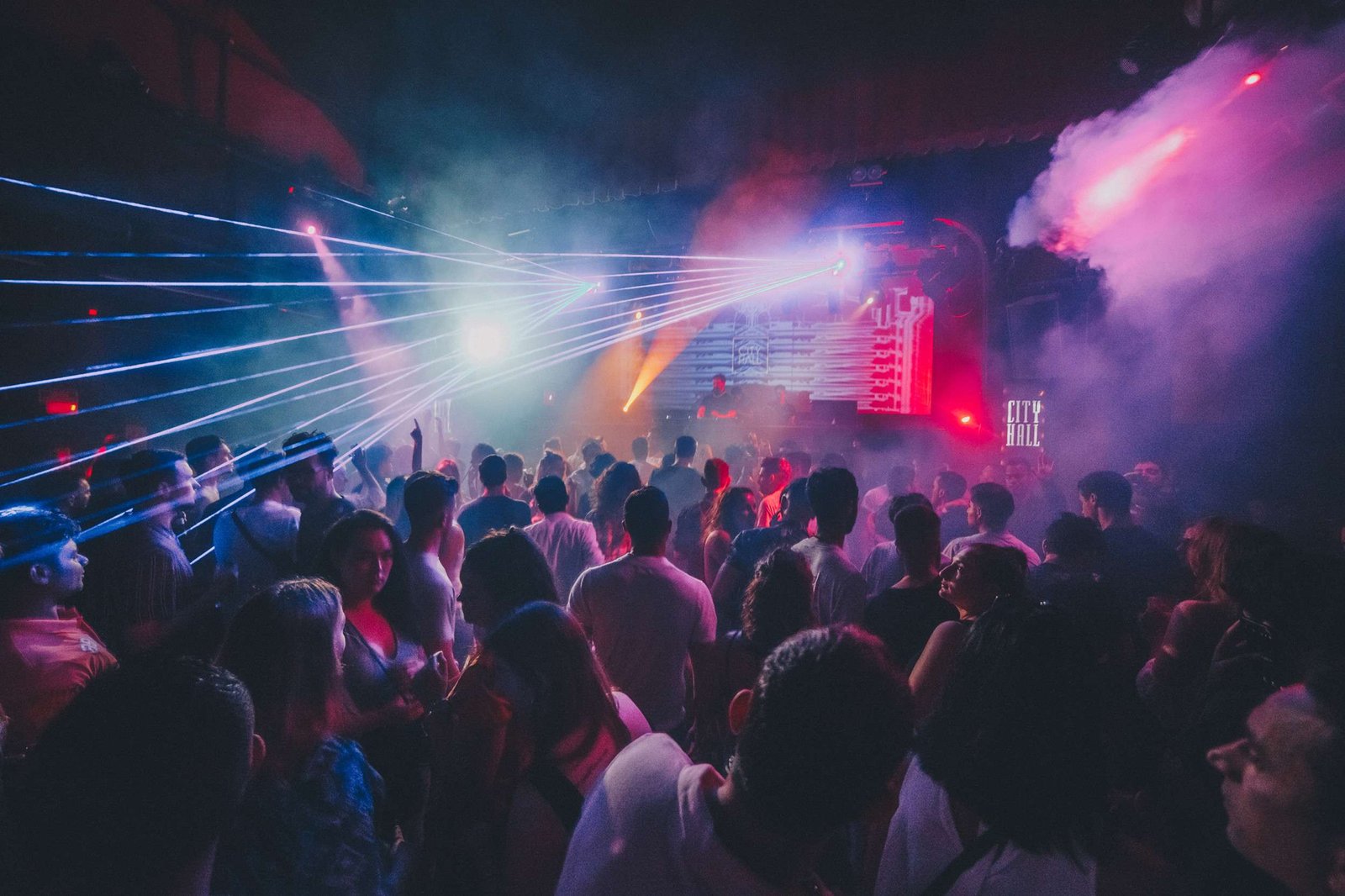
City Hall occupies a central location and runs a varied electronic programme. It is a useful option when you want to stay near Barcelona’s main transport connections, but the calendar is not confined to underground techno. It can move between house, hard dance, makina, bounce and other club styles. That breadth should be explained rather than sold as a uniformly purist techno programme.
Recent October 2026 nights demonstrate the range. Its Secret Room x Future Headliners programme focused on hard techno, while another event featured makina. Specific tickets may have separate rooms or early-entry conditions. If you are after hypnotic or minimal techno rather than fast hard dance, read the artists and event concept carefully.
Address: Rambla de Catalunya 2–4, 08007 Barcelona. Official events and tickets.
9. Sala Upload: a wider underground music venue, not techno-only
Best for: independent music events, alternative parties and occasional electronic nights. Area: Poble Espanyol, Montjuïc.
Sala Upload is important to Barcelona’s wider independent music community, but it needs different treatment from MOOG or INPUT. Its official calendar includes punk, experimental rock, live concerts, electronic DJ events and several crossover formats. Some nights will be relevant to techno fans; others are unrelated. That’s part of its character, not a flaw.
Late-October and November 2026 listings include Fervo Fluxo, Nocturna Festival and other club nights, alongside numerous concerts. If the actual event appeals to you, Upload offers another way into Barcelona’s grassroots cultural landscape. If you need several hours of uninterrupted techno, it would be misleading to recommend it without checking the promoter.
Address: Poble Espanyol, Avinguda de Francesc Ferrer i Guàrdia 13, Barcelona. Official Sala Upload agenda.

10. La Terrrazza: a seasonal open-air electronic alternative
Best for: warm-weather open-air parties, house and electronic events on Montjuïc. Area: Poble Espanyol.
La Terrrazza gives the city a different kind of dancefloor: a long-established open-air club inside Poble Espanyol. It is often associated with house and related electronic styles, with techno on particular nights. That distinction matters. You should not book it expecting a conventional year-round indoor techno club.
Late-2026 availability: its official site advertised a 2026 closing weekend on 9–11 October and an additional Halloween party on 31 October. Outside such special events, the space is seasonal. The published 2027 opening date was not yet confirmed at the time of this update. Do not travel there on an arbitrary winter weekend assuming it is open.
The event-specific entrance may differ between sunset and night sessions. Check the official location guidance and the exact ticket before departing.
Address: Avinguda de Francesc Ferrer i Guàrdia, Poble Espanyol, Barcelona. Official venue and events · Entrance information.
Which Barcelona techno club should you choose?
For committed techno without a huge crowd: MOOG is the most reliable starting point, and LAUT deserves serious attention for particular selectors. For big, sound-focused programming: INPUT often has the clearest dedicated techno bills. For long-running electronic club culture: Nitsa can be exceptional when the specific booking aligns with your taste.
For multi-room and genre-crossing nights: investigate Razzmatazz’s Human programme instead of treating every room as the same party. For a very small room: Macarena and Les Enfants Brillants are worth checking, with the latter’s published 21+ rules. For harder central-city nights: City Hall sometimes programmes dedicated hard-techno events. For a wider underground cultural event: Upload is an option. If you are visiting in season and prefer an open-air format, look at La Terrrazza’s calendar.
The strongest approach is to pick the lineup, promoter and format you actually want. A famous name or a generic ‘techno’ tag does not tell you whether the music will be hypnotic, raw, house-influenced or high-BPM hard dance.
Planning a techno night in Barcelona
- Check the actual venue and room. Razzmatazz, Sala Apolo and Poble Espanyol have separate programmes and doors. Buying a ticket for the complex does not necessarily give you access to a different club or room.
- Understand the metro hours. TMB currently lists service from 05:00 to midnight Monday–Thursday, until 02:00 on Fridays, and continuous overnight Saturday into Sunday. Night buses cover other periods, but routes vary.
- Take physical identification. Clubs are generally adults-only, but not every age minimum is 18. Les Enfants Brillants publishes 21+, and some individual events elsewhere set their own threshold.
- Respect the venue’s culture. Photography restrictions, safer-space policies, and entry requirements differ. A music-driven space is not an invitation to record strangers or ignore staff instructions.
- Do not assume a fixed ticket price. MOOG has some lower-cost resident nights, while major international bills and festival-scale productions can be much more expensive. Prices are specific to each event.
- Review the return journey. Poble Espanyol is not in the same location as Raval or Poblenou. Confirm where your event ends before relying on a late-night train or taxi.
Consult TMB’s official metro and bus hours and Resident Advisor’s Barcelona event listings before going out.
Barcelona techno clubs: frequently asked questions
Which Barcelona club is best for techno?
MOOG is a strong smaller-room option with regular techno programming; INPUT is a leading choice for larger sound-focused techno nights. Nitsa and Razzmatazz’s Human programme are excellent when the specific lineup is relevant.
Can I find techno in Barcelona during the week?
Yes. MOOG lists DJ sessions every night, while clubs such as Macarena and City Hall advertise midweek electronic nights. Always verify the precise date and style.
Is Razzmatazz a dedicated techno club?
No. It is a multi-room, multi-genre venue. Its Human programme is the more useful starting point for techno, industrial and other adventurous electronic music.
Are INPUT and Sala Upload the same club?
No. Both are located inside Poble Espanyol, but they run different events and have separate identities. La Terrrazza is another independent, seasonal venue in that complex.
Is La Terrrazza open all winter?
Do not assume so. Its 2026 outdoor season closed in October with a special Halloween date announced afterwards. Look for its next official season announcement.
Are all Barcelona techno clubs 18+?
No. Some clubs or specific nights set higher minimum ages. Les Enfants Brillants specifies 21+, while other venues can set special restrictions by event.
How do I find the best lineup tonight?
Use the venue’s official calendar first, then cross-check a relevant promoter’s listing on Resident Advisor. Pay attention to who is actually booked, start times, room access and age rules.
Explore more techno city guides
Continue exploring Berlin, London, Paris, Amsterdam and Copenhagen. For help identifying the sounds on club listings, read our guide to techno subgenres.
Editorial methodology: Reviewed 30 October 2026 using official venue calendars, event information, Barcelona transport guidance and current electronic-music listings. We distinguish active dedicated clubs from mixed programmes and seasonal venues. Live event information and venue policies can change after publication, and the official venue always takes precedence.