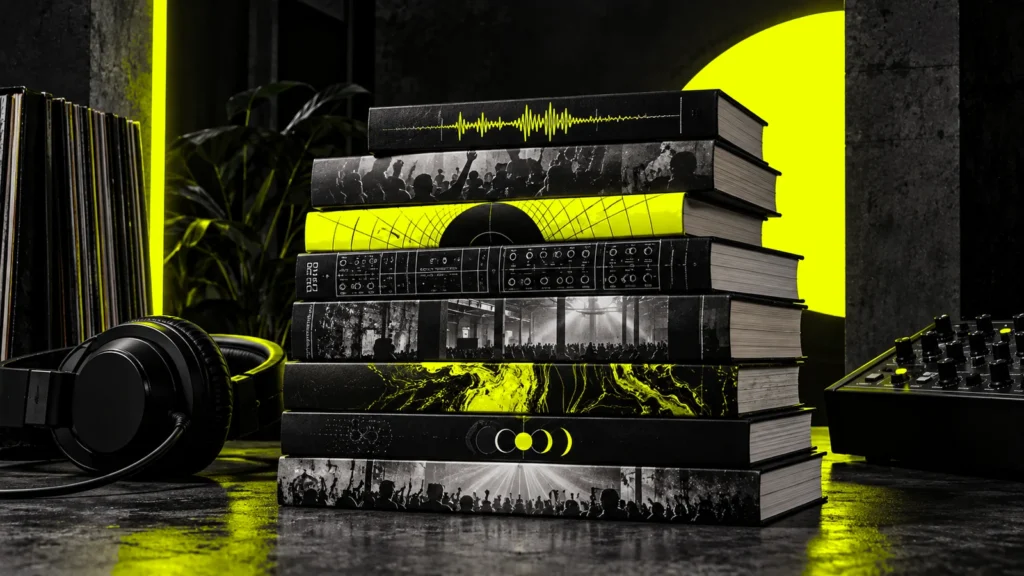
What are the best books about techno, rave culture and underground electronic music? Start with Techno Rebels for Detroit’s foundations, Last Night a DJ Saved My Life for DJ history, and Energy Flash for a wide-angle account of the rave era. If Berlin, British bass music or the ideas behind Afrofuturist sound interest you more, there are books here that go much further into those particular worlds.
Our selection follows the music across different scenes rather than treating “EDM” as a single style. The term is a convenient search shorthand, but the actual stories belong to particular cities, communities and musical traditions. The nine recommendations below include accessible histories, oral accounts, an edited source collection, an out-of-print reference guide and a challenging work of sonic theory.
Reviewed and updated on 31 October 2026. Authors, titles and identifiable editions have been checked against publishers, catalogues or credible music reporting. Edition dates, availability and buying links can change. This is an editorial reading list, not a sales ranking or a claim that every book is currently in print.
A note on the original list: earlier versions counted Simon Reynolds’ Generation Ecstasy and Energy Flash as two separate books. They are connected editions/titles of the same work, so we have kept the later Energy Flash and added Der Klang der Familie, an essential account of Berlin techno. The other eight original works remain in this selection.
Disclosure: Some Amazon links below are affiliate links inherited from the original Underground Talent article. If you buy through them, we may earn a commission at no additional cost to you. Publisher and catalogue links are provided so you can verify the title and choose the edition you want. Affiliate links are not a guarantee of availability or price.
The nine books at a glance
| Book | Author/editor | Read it for |
|---|---|---|
| 1. Last Night a DJ Saved My Life: The History of the Disc Jockey | Bill Brewster and Frank Broughton | Best starting point for understanding the DJ as a cultural figure |
| 2. Techno Rebels: The Renegades of Electronic Funk | Dan Sicko | Best book on Detroit techno’s early history |
| 3. Der Klang der Familie: Berlin, Techno and the Fall of the Wall | Felix Denk and Sven von Thülen | Best for Berlin’s early clubs and the people who built them |
| 4. DJ, Dance, and Rave Culture (Examining Pop Culture) | Edited by Jared Green | Best as a period-source collection on rave, drugs and public debate |
| 5. Energy Flash: A Journey Through Rave Music and Dance Culture | Simon Reynolds | Best panoramic history of the rave era and its sounds |
| 6. Join the Future: Bleep Techno and the Birth of British Bass Music | Matt Anniss | Best for Sheffield, Leeds, soundsystem culture and the roots of UK bass |
| 7. Rave On: Global Adventures in Electronic Dance Music | Matthew Collin | Best for what happened when underground dance music became a global industry |
| 8. The Rough Guide to Techno | Tim Barr | Best for digging through a historical techno reference shelf |
| 9. More Brilliant Than the Sun: Adventures in Sonic Fiction | Kodwo Eshun | Best for adventurous thinking about futurism, technology and Black music |
New to the subject? Begin with Brewster and Broughton, Sicko or Reynolds. Already know the usual story? Try Anniss for Sheffield and northern bass culture, Denk and von Thülen for Berlin’s lived history, or Eshun when you want your assumptions challenged.
1. Last Night a DJ Saved My Life: The History of the Disc Jockey
Bill Brewster and Frank Broughton · Originally 1999; substantially revised 2022 UK and 2025 US editions
Best for: Best starting point for understanding the DJ as a cultural figure.

The DJ didn’t suddenly appear with the club superstar era. Brewster and Broughton trace the people, places and technologies that made playing recorded music in public a creative act: radio, mobile sound systems, discos, underground dancefloors and the development of mixing as an art. This is the book to open when you want to understand why a DJ can be much more than someone selecting the next track.
The sweep matters for techno because it connects the culture to what came before it. You begin to see how American disco and Black and queer dance communities, Jamaican sound-system practices, and evolving club technology shaped the conditions in which house and techno could become distinct movements. Those histories are not identical, and the book helps keep them from collapsing into a single simplified origin story.
For DJs and promoters, the most useful perspective is how scenes grow around relationships between records, rooms and dancers. Producers will find cultural context rather than a technical guide to synthesis. The tone is accessible and anecdote-rich, though its broad scope means that no one city or genre receives every page it deserves.
Buyer’s note: the much-expanded 2022 White Rabbit UK edition has a James Murphy foreword; Grove’s revised US paperback appeared in February 2025. Check the edition and ISBN rather than assuming a used 1999 copy contains the newer chapters.
Check the edition: ISBN 9781474625593 (2022 UK hardback); 9780802163905 (2025 US paperback). publisher’s US edition details; find a copy at Amazon (affiliate link)
2. Techno Rebels: The Renegades of Electronic Funk
Dan Sicko · First published 1999; revised/expanded Wayne State University Press edition 2010
Best for: Best book on Detroit techno’s early history.
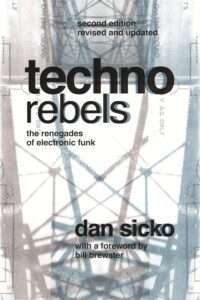
If the goal is to understand where techno came from, start here. Sicko grounds the music in Detroit’s particular network of radio broadcasts, DJs, producers, local parties and Black electronic funk. The Electrifying Mojo, Ken Collier and the musicians around the early Detroit scene appear within a city and a community rather than as disconnected legends.
Juan Atkins, Derrick May and Kevin Saunderson are essential to the story, but the strength of a good history is the larger ecology it describes. ‘Techno began in Detroit’ is a starting point, not a complete account of how the records were made, heard and circulated. The revised volume also attends to the music’s reception outside the US without confusing European commercial success with its birthplace.
This is a relatively focused study rather than a full biography of every subsequent Detroit producer. That makes it a useful companion to our own 30 techno pioneers guide, where the historical profiles lead into particular labels and recordings.
Edition note: Wayne State University Press lists the expanded edition from 15 April 2010, with a foreword by Bill Brewster. It remains the most useful edition to look for; the 1999 original is an earlier snapshot.
Check the edition: ISBN 9780814334386 (2010 edition). Wayne State University Press; find a copy at Amazon (affiliate link)
3. Der Klang der Familie: Berlin, Techno and the Fall of the Wall
Felix Denk and Sven von Thülen · German original 2012; English-language edition 2014
Best for: Best for Berlin’s early clubs and the people who built them.
Berlin’s relationship with techno cannot be explained by one superclub. Denk and von Thülen build an oral history of the extraordinary moment after the fall of the Wall, when empty and contested spaces in the city opened possibilities for experimental clubs, record shops, parties and new connections between East and West.
Rather than building a conventional hero narrative around just a handful of star DJs, the book lets producers, dancers, promoters, door staff and organisers describe the scene in their own voices. Venues such as Tresor and E-Werk become part of a story about city space and social change, while Detroit’s music remains audible in the background. It is especially useful for understanding how a local club network develops an identity that the rest of the world later tries to copy.
It also corrects an imbalance in many reading lists: books that stop at Detroit or the British rave explosion can make Berlin seem to have appeared from nowhere. This history gives that scene a timeline and context of its own. Pair it with our Berlin techno club guide to separate the 1990s history from today’s changing venues.
Publication note: the German original appeared in 2012; the 308-page English Books on Demand edition was published in October 2014. It is a translation, not a new work released that year.
Check the edition: ISBN 9783738604290 (English paperback, 2014). English edition from Books on Demand.
4. DJ, Dance, and Rave Culture (Examining Pop Culture)
Edited by Jared Green · Greenhaven Press library-bound edition listed 2005
Best for: Best as a period-source collection on rave, drugs and public debate.
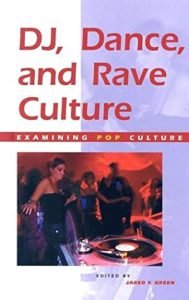
This is the odd one out in the best possible sense. It is not a single flowing narrative written by a club journalist; it is an edited book in Greenhaven’s Examining Pop Culture series, bringing together material and viewpoints around dance music and raves. Jared Green is the editor, not the sole author of every included argument.
Its value is historical context. It captures how people discussed electronic dance gatherings, DJs, drug use and youth culture when the subject was entangled with tabloid anxiety and public policy. Reading conflicting arguments together can reveal how a scene looks from inside and outside, though the reporting and framing reflect the period in which the material appeared.
For a contemporary organiser it is not a source for current licensing rules, harm-reduction practice or venue-safety standards. Treat it as an archive of a debate, then consult current primary guidance for real events. Our history of rave culture provides a broader timeline.
Availability note: the library-bound 160-page edition is catalogued by Greenhaven Press in 2005 and may require a library or second-hand search. Some book databases give 2004 as a first-publication date; the ISBN above identifies the cited print edition.
Check the edition: ISBN 9780737725476. edition and ISBN listing; find a copy at Amazon (affiliate link)
5. Energy Flash: A Journey Through Rave Music and Dance Culture
Simon Reynolds · Original 1998; enlarged editions including 2013 Faber & Faber
Best for: Best panoramic history of the rave era and its sounds.
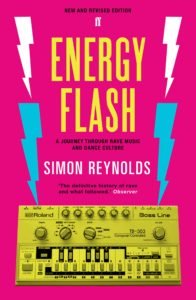
Reynolds follows rave from its Chicago and Detroit connections through acid house, Manchester, the British free-party movement, hardcore, jungle, ambient and the various routes through which underground styles became public phenomena. It mixes firsthand recollection, cultural criticism, artist interviews and close attention to the changing sound of records. The result is ambitious, opinionated and unusually detailed.
What distinguishes it from a list of classic tracks is its interest in how the music feels and functions: how technology, drugs, media, class and the peculiar intensity of an all-night dancefloor influenced one another. Reynolds is a participant-observer and critic, not a neutral archivist. That perspective gives the book energy, but readers should keep a second source close when assessing broad cultural claims.
This is the most obvious all-round choice if you want a single work to connect dozens of scenes. The revised 2013 edition extends the story to dubstep and the US EDM expansion, whereas the first 1998 text records an earlier moment. Check the subtitle and edition when buying.
Important correction: Generation Ecstasy: Into the World of Techno and Rave Culture is the North American title associated with Reynolds’ earlier rave-history book. It is not a separate ninth recommendation. The original Underground Talent article counted Generation Ecstasy and Energy Flash as two different books; this update treats them as one work with multiple editions and regional titles.
Check the edition: ISBN 9780571289134 (2013 revised UK paperback). 2013 Faber & Faber edition catalogue; find a copy at Amazon (affiliate link)
6. Join the Future: Bleep Techno and the Birth of British Bass Music
Matt Anniss · Originally 2019; revised, expanded second edition in 2023
Best for: Best for Sheffield, Leeds, soundsystem culture and the roots of UK bass.
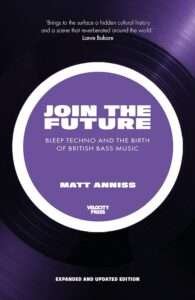
Not every origin story needs to start in London. Anniss traces bleep and bass through the northern and Midlands networks of electro dancers, sound systems, clubs and musicians who adapted ideas from Detroit techno, Chicago house, hip-hop and reggae. The book gives close attention to the often overlooked period between the late 1980s and the explosive early years of UK hardcore and jungle.
The emphasis on sub-bass makes this particularly rewarding for producers: you begin to hear connections between skeletal rhythms, space around the kick, insistent electronic tones and the later lineage of UK garage, jungle, bassline, grime and dubstep. It also shows the importance of Warp Records’ early orbit without turning the label into the whole story.
The book is careful about the people and regions that conventional UK dance-music narratives can leave out. It is narrower than Energy Flash, but that depth is its point. You can listen alongside the text: choose a bleep-era record, then follow its rhythmic or bass-design ideas into a later UK sound.
Edition note: Velocity Press says the 2023 edition corrects earlier errors, adds research and contains a new afterword. If you are buying it now, check for the revised edition; the original Amazon link from this page may lead to the earlier 2019 printing.
Check the edition: ISBN 9781913231323 (publisher listing). Velocity Press, revised edition; find a copy at Amazon (affiliate link)
7. Rave On: Global Adventures in Electronic Dance Music
Matthew Collin · 2018, Serpent’s Tail and international editions
Best for: Best for what happened when underground dance music became a global industry.
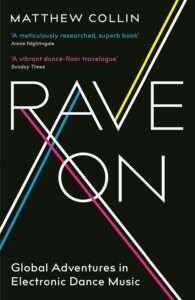
Collin’s subject is what happens after a culture becomes globally visible. He travels through different club economies and dancefloor communities, from established centres such as Detroit, Berlin and Ibiza to more commercially concentrated scenes and less familiar local networks. The question is not simply whether electronic dance music got bigger, but what that growth changed.
That makes the book a useful counterweight to histories that end in the heroic early years. Commercial festivals, tourism, queer nightlife, grassroots organisers and local musical identities do not experience the same industry in the same way. A scene can create opportunity, lose space and reinvent itself at the same time.
This is a travel-reporting perspective rather than a definitive chronological textbook; it is interested in the tension between independence and commercial scale. Readers interested in the present-day meaning of the word underground will find that tension familiar. Our piece on what underground music means approaches the question from the culture itself.
Publication note: the Serpent’s Tail edition was published in January 2018. Its examples describe the international landscape observed during the reporting period, not a constantly updated 2026 directory of clubs and parties.
Check the edition: ISBN 9781782831457 (publisher catalogue ebook listing). Serpent’s Tail publisher page; find a copy at Amazon (affiliate link)
8. The Rough Guide to Techno
Tim Barr · 2000, Rough Guides; out of print
Best for: Best for digging through a historical techno reference shelf.
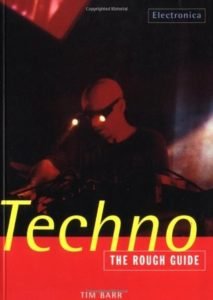
This compact reference book belongs to a different era of music discovery: before streaming platforms could return a thousand tracks from a search query, you followed album credits, label catalogues, magazine reviews and the names that kept turning up in other people’s record bags. Barr’s guide collects biographies, discographies and context for roughly 200 figures connected to the techno spectrum.
Its value today is not that every selection would appear in a current definition of techno. Some featured acts sit closer to trance, ambient or adjacent styles, reflecting how wide and flexible the term was in dance-music publishing around 2000. Those boundaries are themselves historically revealing. Use the book as a listening map, not as a contemporary ranking of the genre’s most important artists.
Look up an unfamiliar name, find the period’s releases and then compare them with later work. If a discography ends around 2000, that is a feature of the book’s age, not evidence the artist stopped releasing music. Our techno subgenres guide can help put some of those broad historical classifications in context.
Availability note: the 2000 Rough Guides paperback (ISBN 9781858284347) is out of print according to the distributor. The sensible way to find it may be a used-book shop, library or second-hand marketplace. Do not pay a collector’s price expecting a current artist directory.
Check the edition: ISBN 9781858284347. 2000 edition and out-of-print listing; find a copy at Amazon (affiliate link)
9. More Brilliant Than the Sun: Adventures in Sonic Fiction
Kodwo Eshun · Original 1998 Quartet Books; later Verso editions/reprints
Best for: Best for adventurous thinking about futurism, technology and Black music.
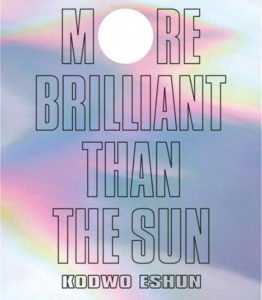
This is not an introductory guide to techno history or a manual on making beats. Eshun writes through the ideas and imagined worlds generated by music, moving among jazz, dub, funk, hip-hop, jungle and techno. Underground Resistance sits in a conceptual universe that also includes Sun Ra, Alice Coltrane, Lee Perry and Parliament. The project is to think with sound, not merely to date its releases.
Eshun’s dense language and speculative arguments can be demanding, especially if you want simple definitions or a conventional chronological tour. That difficulty is part of why the book remains important: it invites electronic-music listeners to take concepts, technologies, Black cultural innovation and imagined futures seriously without reducing them to a neat genre family tree.
For producers and writers interested in experimentation, its lasting question is productive: what worlds might a rhythm, machine or sound make possible? It is best read after gaining some basic scene history, when its references begin to open up rather than feel like a list of unfamiliar names.
Edition note: the original appeared in 1998 with Quartet Books. Verso later brought the text back into print, including material associated with the filmmaker John Akomfrah and producer/theorist Steve Goodman (Kode9). Edition dates and pagination vary in catalogues; confirm the specific ISBN when ordering.
Check the edition: ISBN 9781784786724 (Verso edition). Verso edition bibliographic record; find a copy at Amazon (affiliate link)
What should you read first?
If you want to understand how techno began
Read Techno Rebels first, then Der Klang der Familie. That sequence moves from Detroit’s musical community to the particular circumstances that helped techno grow in Berlin. It is a more precise starting point than the claim that techno simply “spread from house music to Europe.” For additional musical examples, listen alongside our historical profiles of 30 techno pioneers.
If you want to understand DJs, records and dancefloors
Start with Last Night a DJ Saved My Life and then read Energy Flash. The first explains the DJ’s longer cultural and technological history; the second follows the rave movement as genres and dancefloor experiences transformed each other. They overlap, but they ask different questions.
If you’re a producer who loves unusual rhythms and low end
Choose Join the Future. It puts bleep techno, sound-system practice and early UK bass music in the same narrative. Take a break from the page to listen to the records it discusses, then work out which arrangement or sound-design ideas you actually hear.
If you’re interested in culture beyond familiar club histories
Move from Rave On to More Brilliant Than the Sun. One examines electronic dance music in global social and commercial spaces; the other expands the conceptual vocabulary we can use to think about sound and futurity. Neither should be confused with a current directory of venues.
How Underground Talent selected these books
We prioritised books with a clear subject, identifiable author or editor, reliable bibliographic evidence and an enduring contribution to understanding underground electronic music. The list deliberately spans different types of writing: original reporting, oral history, criticism, reference and theory. It is not a popularity vote, a ranking by literary merit or an attempt to imply that the nine books cover every region or community equally well.
We also checked editions, not merely titles. A new printing can contain extra chapters, an old book can be out of print, and two different jackets can represent the same underlying work. This matters for Energy Flash/Generation Ecstasy, the revised Join the Future, and Last Night a DJ Saved My Life. Links to publishers or catalogues let you make an informed choice.
Every book here has a point of view. Many of the best electronic-music histories are written by people who lived part of the story; that gives them access and character, but it can also leave other scenes and experiences outside the frame. Read across authors and locations, and compare the stories with recordings, archives and the people still building the culture.
Frequently asked questions
What is the best book about Detroit techno?
Techno Rebels by Dan Sicko is a focused starting point. The 2010 updated edition from Wayne State University Press is the version we recommend looking for. It gives Detroit’s musicians, DJs and local setting the central role that a broad dance-music survey cannot always provide.
Are Energy Flash and Generation Ecstasy different books?
No, they are related editions and regional titles of Simon Reynolds’ rave history. Energy Flash appeared originally in the UK and Generation Ecstasy was used for the American edition. Later expanded printings differ in scope and chapter content, so check the edition and ISBN you are buying. We count them once, not twice.
Which book best explains Berlin techno culture?
Der Klang der Familie by Felix Denk and Sven von Thülen is a strong choice for the post-Wall scene, including club spaces and the people who made them work. It documents a specific historical period, not current Berlin nightlife. If you plan to visit clubs today, use current venue schedules and advice separately.
Which electronic music books are best for DJs?
For the history of the craft, begin with Brewster and Broughton’s Last Night a DJ Saved My Life. For a larger account of the scenes that shaped DJ culture in the rave era, read Reynolds’ Energy Flash. Neither is a substitute for a practical beatmatching, performance or technical setup guide.
Are these books about mainstream EDM festivals?
Mostly not. Several focus on Detroit techno, underground dancefloors, UK rave, bleep and bass, Berlin club culture or experimental sonic ideas. Rave On examines what happens when local electronic-music cultures meet a global commercial industry, which includes more mainstream settings.
Where can I buy out-of-print techno books?
Search by the precise ISBN in public libraries, interlibrary loan services, independent bookshops or reputable second-hand sellers. The Rough Guide to Techno is an example of a book worth locating as a historical reference without overpaying for a supposed “latest edition” that does not exist.
Is there one book that covers all of electronic music?
No single book can responsibly cover every sound, community and period. If you want the broadest start from this list, try Last Night a DJ Saved My Life for the role of DJs and Energy Flash for the rave decades. Then choose a more focused history based on the records and cities you want to understand.
Further reading and source checks
Publisher and edition references are linked in each book entry. These additional catalogues and research resources help establish the editions and historical context:
- Yale University Library: electronic dance music books.
- Hachette / White Rabbit: 2022 edition of Last Night a DJ Saved My Life.
- Routledge: Generation Ecstasy edition and Penguin Random House: Energy Flash US edition.
- Suhrkamp: original German Der Klang der Familie and English-edition history.
- Wayne State University Press: Techno Rebels revised edition.
- Velocity Press: revised Join the Future.
Want to explore the culture beyond the books? See our guide to techno parties, history of rave and guide to techno subgenres. All three are separate from this book-buying guide and are designed to answer different questions.
The useful question is not “Which book belongs at number one?” It is which history will make you hear a record, recognise a city, or understand a dancefloor differently the next time you encounter it.