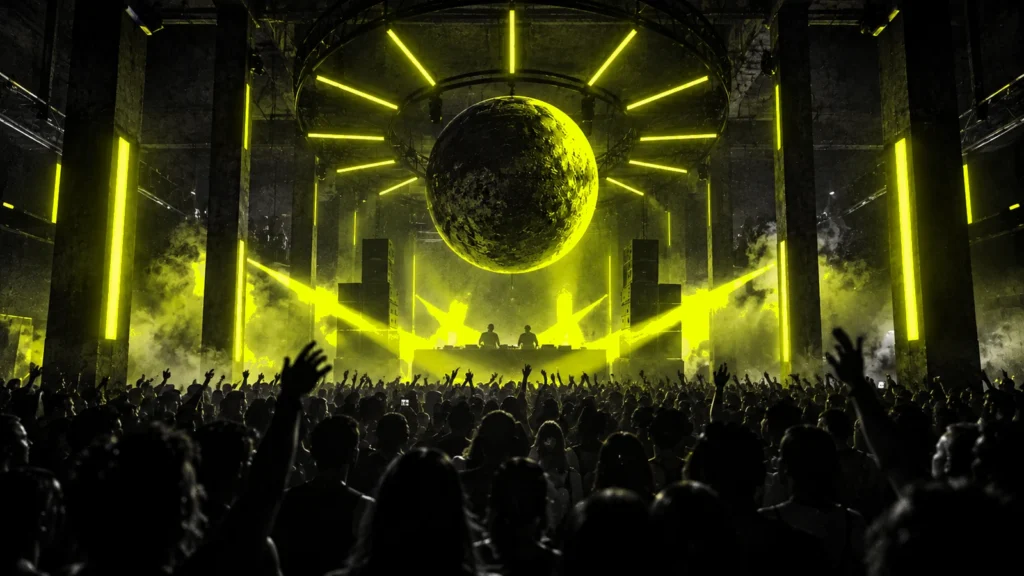
What is a techno party? It is a dance event built around techno: electronic music driven by repeating rhythms, evolving patterns, a powerful low end and the choices of the DJ or live performer. At its best, the night is less about a succession of headline moments and more about the relationship between sound, space and people dancing together. A techno party might be a small weekly club night, a licensed warehouse-style event, an open-air gathering or a large festival stage. Those settings can feel very different.
You do not need to know every label, own a particular outfit or recognise the DJ to enjoy one. You do need to know what kind of night you are attending, respect the room and the people in it, and prepare for the practical realities of prolonged dancing and amplified sound. The culture can be open and generous, but no venue becomes safe or inclusive simply by calling itself underground.
This guide explains how techno parties work, where the culture developed, what makes the experience distinctive, how to find a night that suits you and what to know before your first visit. It is about the experience and culture, not a promoter’s production checklist. If you want to organise an event, see our separate practical guide to planning a techno party.
Updated 31 October 2026. Historical references were reviewed against the Detroit Historical Society and the German UNESCO Commission; hearing and crowd-safety recommendations use the World Health Organization, NHS and UK Health and Safety Executive. Individual venues set their own admission rules, opening hours, access arrangements and photography policies.
Techno parties at a glance
| Question | What to expect |
|---|---|
| What music? | Techno-first programming, sometimes extending into electro, dub techno, industrial, hypnotic, minimal or other related sounds. |
| What does it feel like? | Repetitive music changing over time, a shared dancefloor, a sound system that shapes the room and an atmosphere influenced by the promoter and crowd. |
| Where are they held? | Clubs, licensed warehouse-style venues, outdoor spaces and festivals; check that the event has appropriate permission and a reliable organiser. |
| What should I wear? | Comfortable clothes and supportive shoes suitable for the venue; some nights have specific dress or door policies. |
| Do I need to know the DJs? | No. Listen to recent mixes or sets to see whether the music appeals to you, rather than choosing only by name recognition. |
| What should I bring? | Valid ID where required, your ticket, hearing protection, a payment method and a way to get home safely. |
| What matters most? | Music, mutual respect, personal boundaries, safe sound exposure, access to help and honest information from the organiser. |
What makes a techno party different from an ordinary night out?
The obvious answer is the music, but that is only part of it. In a techno-focused room, the set can develop for an hour or more without familiar vocal hooks or obvious stops between tracks. An individual sound may change a fraction at a time: the kick stays, a hi-hat opens, a bass pattern shifts and a new texture slowly moves into the foreground. The experience depends on listening across time, not just waiting for a chorus.
Many techno nights also put less visual emphasis on the performer than a mainstream concert. The DJ may be in a modest booth with the dancefloor as the centre of attention. At other events, a large stage, screens and production effects dominate. Neither layout is the universal definition of techno; the interesting question is whether the setting helps you connect with the music and other dancers.
A room can be intense without being frantic. Some dancers move for hours; others listen quietly or move in short bursts. You may have a conversation in a designated quieter area and say very little on the main floor. For some people this feels like release, for others it is simply the pleasure of hearing strange, intricate records on a well-tuned system. There is no single authentic way to react.
The music: why repetition matters
A kick drum is only the starting point
Techno often uses a steady four-on-the-floor kick, but it is not defined by that drum alone. Percussive patterns, synthesis, low-frequency movement, delays and changes in arrangement create tension and direction. Some tracks are sparse and almost skeletal; others are dense, noisy or atmospheric. Electro and broken-beat influences also feature in techno sets, so a rigid tempo or drum pattern cannot describe every record you will hear.
For a useful map of the sounds, see our guide to techno subgenres. It separates descriptive musical traits from slippery marketing labels. A minimal set may leave space around each sound; a dub-techno track may let chords and delays drift across the rhythm; an industrial-leaning set may use metallic texture and distortion. Labels help you navigate, but the actual music is more interesting than the category.
The DJ shapes a long journey
A good set is not a playlist of the ten hardest tracks available. A DJ can move the room by adding pressure, withdrawing it, introducing unexpected rhythm or simply letting a groove run long enough for its details to become noticeable. The most dramatic change might be a quiet passage after a dense hour rather than an enormous drop.
The role of opening DJs matters. Early in the night, people are arriving, learning the room and finding their rhythm. A considered warm-up can create space for a later guest to explore heavier material. Constant peak-time intensity can exhaust both the ears and the musical possibilities long before the night is over.
Live techno performance can be different again: machines, modular systems, drum machines, sequencers or software may shape sound as it happens. What reaches the dancefloor matters more than whether every sound came from vinyl, USB drives or a live rig. A worthwhile scene makes room for craftsmanship in different formats rather than treating one playback medium as a moral test.
The room is part of the instrument
The same record can feel completely different in a small basement, a reverberant warehouse or an acoustically controlled club. Subwoofers, loudspeaker placement, reflections, surfaces and crowd density all change what reaches your ears. Bass that is satisfying in the centre can become muddy against a wall; the loudest position is not always the best listening position.
Powerful sound is not the same as quality. Clear transients, balanced coverage and controlled bass are usually more useful than maximum volume. If a room sounds harsh, move to another area and use hearing protection rather than standing close to the loudest speaker to prove your commitment. Our room acoustics guide explains why reflections and resonances can change what you hear.
Where techno party culture came from
Detroit: electronic futurism and a living local scene
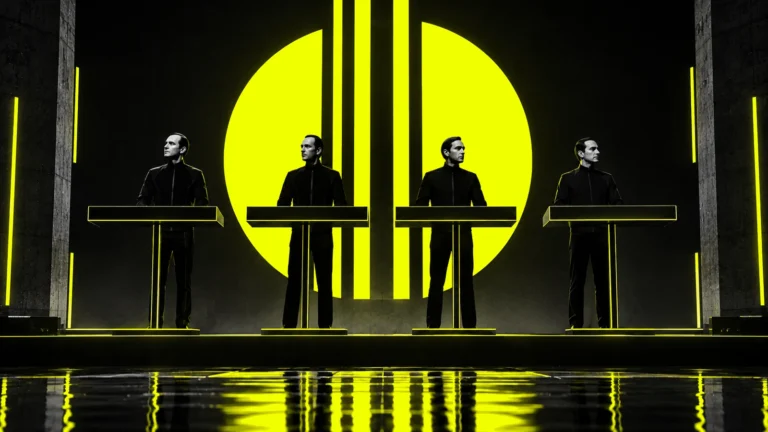
Techno as a distinct musical movement emerged in and around Detroit in the 1980s. Juan Atkins, Derrick May and Kevin Saunderson, later popularly called the Belleville Three, helped shape and circulate its early sound. Their influences included Parliament-Funkadelic, European electronic music such as Kraftwerk, Detroit radio and the music playing in local clubs. The Electrifying Mojo’s wide-ranging broadcasts were especially important in exposing young listeners to unfamiliar combinations of styles.
The story does not end with three names. Eddie Fowlkes, members of the wider Detroit community, DJs, dancers, record shops, parties and labels contributed to its growth. Detroit’s music was rooted in particular Black American creative networks and a city with its own social and technological imagination. Replacing that history with a generic tale about “European warehouse beats” misses how the music came into being.
The Detroit Historical Society’s profile of Juan Atkins documents the Belleville connections, Cybotron, Model 500 and Metroplex; its profiles of Derrick May and Kevin Saunderson place the trio in their wider musical environment. Our 30 techno pioneers feature goes into the labels, records and technical contributions that followed. That is the historical guide; this article is about the shared experience that those records helped make possible.
Europe, the UK rave movement and Berlin after the Wall
Techno spread internationally in the late 1980s and early 1990s, interacting with existing house, acid, electro and electronic-music cultures. Britain’s rave movement was not identical to Detroit techno: it brought together multiple sounds, including acid house, hardcore and eventually jungle, in new environments. Our history of rave culture traces those developments separately.
In Berlin, the years after the fall of the Wall created unusual conditions for clubs, promoters, dancers and artists to occupy and transform spaces. The relationships between Berlin, Detroit and other scenes helped develop a recognisable local club culture. In 2024, Berlin techno culture was added to Germany’s national inventory of intangible cultural heritage, recognising its social and cultural significance. That is not the same as a venue being declared a UNESCO World Heritage Site. The German UNESCO Commission describes the designation and the role of dance events in Berlin’s techno culture.
Those histories help explain why a techno night can carry more meaning than entertainment alone. They do not mean every modern club inherits the same values, and they do not oblige anyone to express cultural identity in a particular way. The scene’s history is worth knowing; the dancefloor still has to earn the trust of people who walk into it today.
What actually happens during a techno party?
Imagine arriving at a small, licensed club on a weekend evening. You check the entry conditions, present a ticket or pay on the door if tickets are available, and pass the venue’s security procedure. The bass is audible before you reach the main room, but at first the space may be half full. The opening DJ is setting a mood rather than demanding maximum attention.
You get your bearings: where to find water, toilets, staff, a quieter area and a clear route back outside. Some venues use phone-camera stickers or rules against photography; others welcome filming. It is better to follow the specific policy than assume all techno clubs do the same thing.
As people arrive, the room changes. The DJ adjusts to the crowd, or the sound becomes more intense as the running order progresses. There may be a deliberate peak, followed by a more patient or experimental set. The best moment might come well before the advertised guest or long after it. If you came only for one famous name, you could miss most of the night’s musical character.
This is an illustrative scene, not a universal schedule. A daytime outdoor event, a large festival or a live hardware performance will have different logistics, sound, lighting and relationships between the artists and audience. The best way to judge a night is to see whether its actual experience matches what the promoter promised.
Lighting, darkness and the choice not to film
Light can shape the space without turning every second into a spectacle. A few controlled beams in haze, a gradual colour change or a brief moment of darkness can make a small gesture in the music feel enormous. Other nights prefer almost no visible production. The value is in the relationship between the visuals, the room and the sound, not the number of lasers.
Some dancefloors discourage photography because people may want to move without being recorded. Respect those rules and other people’s boundaries, even when filming is technically permitted. A camera-free policy is not inherently better for everyone, but filming strangers without consent can damage the very trust a scene says it values.
Different kinds of techno parties
Small club nights and resident-led parties
These are often the best introduction to a local scene. A resident DJ may know the room well and have time to build a sound across multiple hours. You can get a feel for the promoters, regulars and musical direction without needing a huge production budget. Small does not necessarily mean quieter or less professional, so check the venue’s sound and safety provisions.
Licensed warehouse-style events
Large, industrial-looking rooms can offer space for immersive sound and striking visuals. The warehouse aesthetic does not tell you whether a party is licensed, insured, safely staffed or accessible. Look for a real organiser, clear ticket conditions and a known venue. Do not treat secrecy or a hard-to-find address as proof of musical authenticity.
Outdoor gatherings and festivals
Outdoor events can add multiple stages, live acts, daytime programming and very different sound constraints. Travel, weather, site distances and facilities become more important. A festival with a techno stage may attract a mixed audience; that is not the same format as a tightly programmed club night with a specific musical identity.
Temporary collectives and hybrid spaces
Some events grow out of art spaces, small cultural organisations, local record shops or grassroots collectives. They can connect artists who are not yet represented on large festival lineups and give dancers space to discover unfamiliar sounds. Choose events that communicate practical arrangements honestly and take their responsibilities seriously.
Going to your first techno party: a practical checklist
There is no entrance exam for techno. The useful preparation is ordinary and unglamorous: know where you are going, understand what kind of music is being played and arrange a safe way home.
- Listen before you book. Sample a recent mix or a few tracks from the lineup. The word techno can describe very different styles, from deep and patient to fast and abrasive.
- Check the official event details. Confirm date, venue, entry age, door times, ticketing, photography policy, accessibility and any last-entry requirements. Screenshots or old listings may be wrong.
- Choose practical clothes. Wear shoes suitable for prolonged standing and dancing. Check whether the venue has a cloakroom, lockers or a specific dress policy; there is no mandatory all-black techno uniform.
- Protect your hearing. Bring well-fitting music earplugs. Take breaks away from the main PA and do not assume the absence of pain means the sound level is harmless.
- Plan for water and rest. Know where to find drinking water and a quieter spot. Take breaks; an enjoyable night does not require dancing without interruption.
- Make a journey plan. Confirm late-night trains, buses or a trusted ride. Keep your phone charged and a route home available even if you go with friends.
- Understand consent. Respect physical space, accept a refusal immediately and ask before photographing strangers. Never assume all attendees want the same social interaction.
- Know where to find help. Locate venue staff, security or the welfare team. Report harassment, an unsafe crowd situation or someone who appears seriously unwell.
If you’re uncertain whether an event is appropriate for you, contact the organiser before buying a ticket. A credible promoter should be able to answer reasonable questions about accessibility and admission without treating them as an inconvenience.
Safer dancefloors: sound, crowd care and personal boundaries
Underground music’s language of freedom only means something when people can take part without fear. A crowd may be friendly, but harassment, intimidation, discrimination, dangerous overcrowding and unwanted filming can happen in any nightlife setting. Effective policies and staff responses matter more than claims that “everyone is welcome”. Read our Making Dancefloors Safer Spaces feature for a closer look at everyday behaviour and accountability.
Hearing protection is part of listening
The World Health Organization’s 2022 voluntary standard for venues and events recommends six safety features, including a benchmark for average sound levels, calibrated monitoring, attention to acoustics, hearing protection, quiet zones and staff training. A quoted 100 dB benchmark is not a promise that all listening durations or frequencies are safe, nor is it a universal legal limit. Exposure time, position in the room and individual circumstances all matter.
Listeners can reduce exposure by wearing appropriate earplugs and taking quieter breaks. Venue operators and promoters are responsible for their own professional duties and local legal requirements; a guest bringing earplugs does not excuse dangerously operated sound.
Heat, fatigue and when to get help
A crowded, warm room and hours of dancing can contribute to overheating and exhaustion. Headache, dizziness, nausea, cramps and feeling unusually weak are reasons to stop, move somewhere cooler and seek help. The NHS guidance on heat exhaustion and heatstroke says confusion, seizures or loss of consciousness may indicate a medical emergency. If someone shows serious symptoms, contact venue staff and emergency services promptly rather than expecting them to recover on the dancefloor.
Check that drinking water is available and avoid pressuring friends to stay on the floor if they want to rest or leave. If anyone feels unwell, stay with them and follow appropriate medical guidance. This article is general preparation, not emergency treatment advice.
Crowd movement and knowing the exits
Even a well-liked party can become uncomfortable at a narrow doorway or on a crowded staircase. Do not push through packed areas, block corridors or ignore staff managing crowd movement. The UK HSE’s crowd-control guidance treats entry, movement within a venue and departure as separate safety phases. If you see sustained crushing pressure, a blocked exit or someone in distress, find staff immediately.
Venue rules differ by city and country, but clearly marked exits, reliable staff and honest capacity control are basic signs of professional operation. These are not optional because a night describes itself as underground.
Techno dancefloor etiquette that actually matters
- Let people dance. Do not make strangers move so you can film or occupy the centre of attention. Be aware of bodies and personal space around you.
- Respect consent. Ask before touching, kissing, photographing or drawing someone into a conversation. Move on graciously if they are not interested.
- Keep conversation out of the loudest areas. Head to the bar or designated quiet space if you want a long discussion; shouting into someone’s ear beside the speakers is not a good listening experience.
- Follow the actual camera policy. A no-photo rule may be enforced at the door; elsewhere, the practical rule is to avoid recording people without permission.
- Respect different ways of enjoying music. Not everyone wants to dance with arms raised. Standing still to listen is not inherently disrespectful.
- Treat staff and crews properly. Door workers, sound engineers, cleaners and residents contribute to the night as much as the name on the poster.
- Leave the space usable. Keep drinks and waste away from cables or equipment, do not damage the venue and follow directions during closing or emergencies.
You do not have to prove you belong by knowing a record catalogue, copying a fashion trend or tolerating behaviour you dislike. The most credible form of underground etiquette is to contribute to a space where other people can enjoy the music too.
How to find a good techno party near you
Start with the artists and independent collectives whose music you enjoy. A small local promoter’s history can tell you more than a generic “best club” search: check previous lineups, recent mixes, whether events are consistently promoted and whether attendees can find clear practical information.
Club websites, artist calendars, venue socials, established ticketing providers and specialist event listings such as Resident Advisor’s event listings can help identify nights. A listing is a discovery tool, not a guarantee that every detail remains unchanged. Verify the final venue address, programme and admission rules with the organiser before travelling.
Interested in a particular city? Our current Berlin techno clubs guide distinguishes music-first institutions from the practical reality of changing venue programmes. Other Underground Talent city guides take a similar event-specific approach. Search for the particular party you want rather than assuming a venue plays techno seven nights a week.
A handful of signs are useful: an identifiable organiser, verifiable artists, a real ticket or admission process, clear access information, working contact details, sensible event policies and a history of communicating changes openly. If a night promotes reckless secrecy, refuses basic safety questions or sells tickets to an unclear location with no trustworthy operator, reconsider.
What makes a techno community, rather than a crowd?
Culture is built over repeated nights. Regular DJs introduce unfamiliar records, small labels support producers, independent shops recommend music, and organisers create a place where people want to return. The crowd contributes by listening, respecting one another and making space for newcomers. A big production can bring thousands together for one evening; a small room can build relationships that last years.
The word underground is often used as a shortcut for dark clothing, secret locations or a harder sound. That aesthetic can be enjoyable, but it is not a reliable measure of independence. An intimate, well-managed club night can be more culturally meaningful than an unsafe unauthorised gathering, and a successful large event is not automatically devoid of artistic value.
The tension between art, community and commerce does not disappear. DJs need to be paid, venues need to survive and audiences have practical needs. Music scenes become healthier when promoters are transparent, workers are respected and artists can take creative risks without pretending that everything must be free or permanently obscure. Our piece on what underground music means explores that distinction.
Why go to a techno party at all?
For some people the attraction is physical: an hour of steady, evolving rhythm makes the noise of everyday life less important. Others attend to discover music they would never find through an algorithm. A producer may be listening to kick-drums and reverb tails; a DJ may pay close attention to the running order; someone new to the scene may simply find a place to move without following a familiar pop-song structure.
Not every party will be transformative, and techno is not inherently superior to other dance music. A badly programmed night, an uncomfortable room or a poor sound system can make the experience exhausting. The right event is the one that fits your musical curiosity, boundaries and expectations.
If your first attempt is disappointing, change the context rather than writing off the entire genre. Try a resident-led night, a smaller room or an event focusing on a different part of techno’s musical range. Listening to a mix beforehand will often tell you more than the font on the poster.
Techno parties: frequently asked questions
What is the difference between a techno party and a rave?
A techno party describes the musical focus; a rave usually describes a broader event culture or format, often with long dance sessions, electronic music and a less conventional or festival-like setting. Raves can feature house, hardcore, jungle, trance, techno and other styles. A techno night in a conventional club is not automatically a rave, and a rave is not necessarily a techno party.
Do techno parties have a dress code?
Some venues or event series do, others do not. Dark or comfortable clothing is common in parts of the scene, but there is no universal uniform. Read the event’s official door rules, prioritise suitable shoes and avoid assuming that a specific outfit guarantees entry.
Can I attend a techno party alone?
Yes, many people do, but plan the trip as carefully as any late-night outing. Choose a trusted venue, know how to get home, tell someone your plans if helpful and be willing to leave if the environment feels wrong. Being alone does not make you less of a participant.
How long does a techno party last?
It varies widely. Some are a few-hour evening programme; others are all-night or daytime events. Legal closing times and transport options vary by location. Check the actual doors and finish times, and do not confuse “doors open” with the time a headline artist begins.
Do I need to know techno tracks to enjoy the night?
No. A good DJ set should offer something to a curious listener without an encyclopaedic record collection. If you want to prepare, listen to a recent mix from the lineup and explore the sounds in our techno subgenres explainer.
Are phones and cameras banned at techno events?
Not universally. Some events use a no-photography policy to protect privacy or the atmosphere; others actively encourage clips and photographs. Check venue rules, avoid filming strangers without permission and remember that a phone ban is not a substitute for respectful behaviour.
Are techno parties safe?
Safety depends on the particular organiser, venue, staff, crowd conditions, sound exposure and individual choices. No music genre guarantees safety. Look for working exits, accessible facilities, professional crowd management, clear reporting procedures and staff who take concerns seriously. Use hearing protection and seek urgent help if someone becomes severely unwell.
Where can I find authentic underground techno?
Follow trusted local collectives, residents, independent record shops and artists whose music interests you. Confirm the event details via official channels. “Underground” is not a legally protected quality label and does not necessarily mean a party is secret, cheap or difficult to reach.
Research and further reading
- Detroit Historical Society: Juan Atkins, and its documented profiles of Derrick May and Kevin Saunderson, for Detroit’s early scene.
- German UNESCO Commission: Technokultur in Berlin, including the 2024 national inventory recognition and historical context.
- World Health Organization: Global standard for safe listening at venues and events (2022).
- NHS: Heat exhaustion and heatstroke, for symptom recognition and when to seek help.
- UK Health and Safety Executive: Putting crowd controls in place, for entry, circulation and exit management.
Final thought: the magic is not a dress code, a famous DJ or a warehouse address. It is what happens when a good record, an attentive crowd, a properly run space and a sound system meet. Find the nights that respect those elements, then listen closely enough to hear what makes them different.