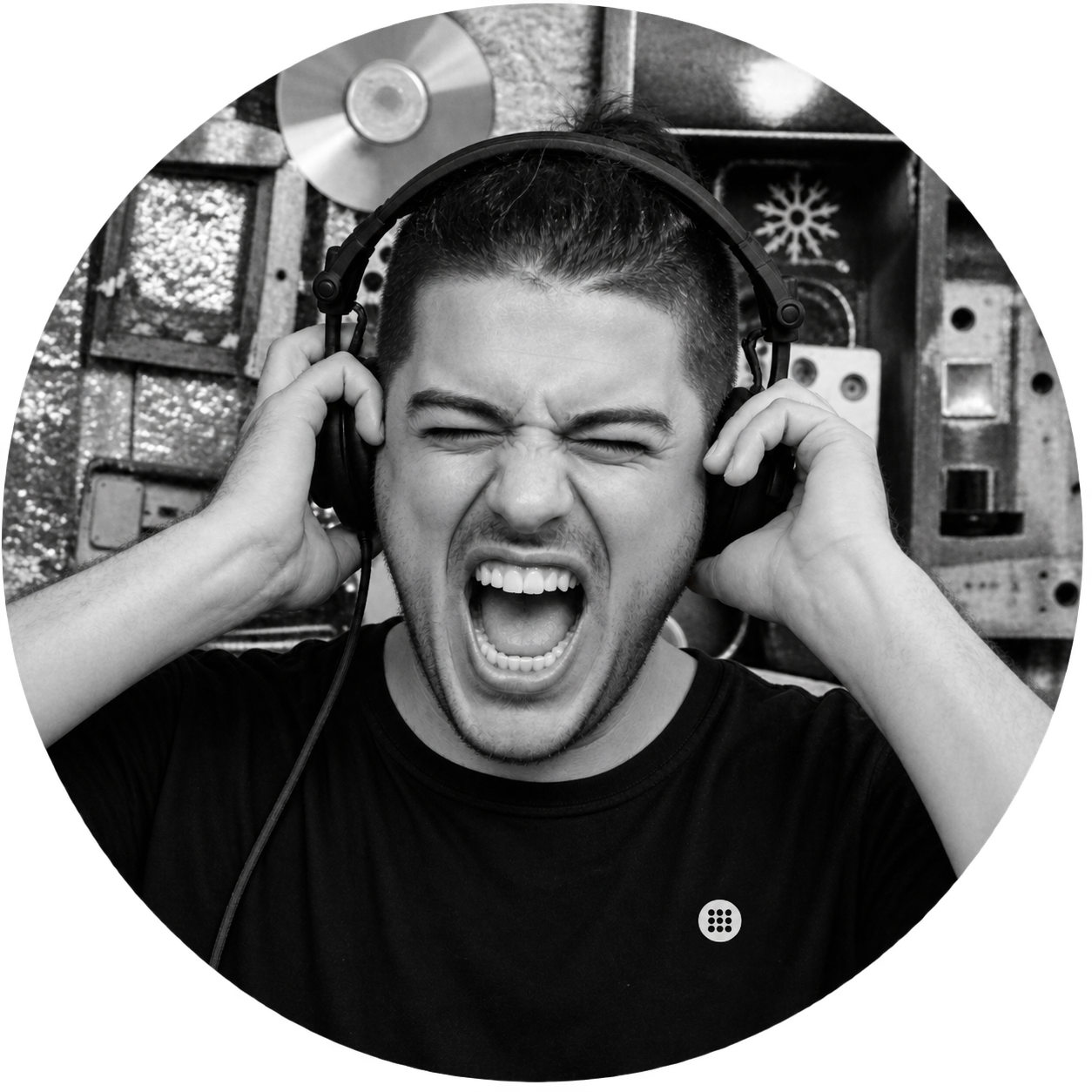
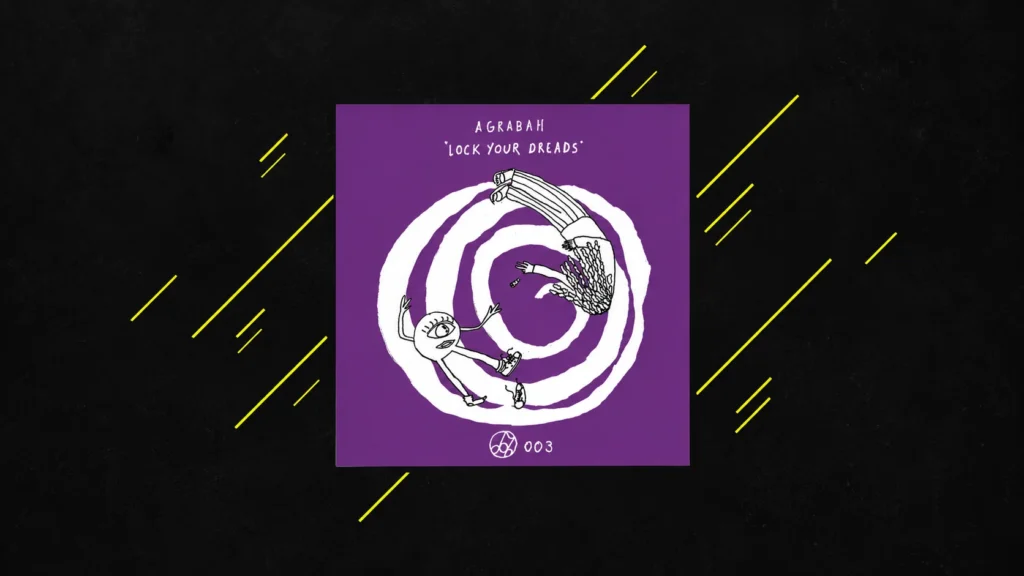
For Ágatha Prado, musical styles are things to connect. As Agrabah, the Curitiba DJ and producer has built sets that move through disco, house, acid, breaks and Brazilian sounds, with each turn serving the journey of the night. Lock Your Dreads, released through Doblado Records, brings a long-standing interest in dub to the front of that approach. Across five versions of one track, Agrabah and her collaborators explore what changes when the rhythm, space and energy around an idea are rearranged.
How Agrabah arrived here
Ágatha’s route into electronic music began with curiosity about what a dancefloor could hold. In an interview with FREQUENCY, she recalls growing up around her father’s record collecting and radio recordings, playing in a band during her teens, and later wanting to make the sounds she could not find for her own sets. She started DJing at a party she helped organise in Curitiba in 2016 and went on to release music through labels including Clipp.art and Gop Tun.
That path has already taken her through several corners of club music. Her 2020 Break Beach EP appeared on Clipp.art, while Ghetto Hong Kong followed on Gop Tun in 2021. Her tracks have also turned up in NTS tracklists. Those details do not put Lock Your Dreads in a neat stylistic sequence, but they show an artist whose interests have long extended beyond a single kind of beat.
Her description of DJing is particularly useful here. She talks about choosing records for a reason, reading the room and building a set with a beginning, a middle and an end. That instinct for connection also helps explain an EP where dub sits alongside ragga, trance and house. These references belong to different histories; the record’s central idea is to let them meet around a club groove rather than force them into one genre label.
The idea at the centre of Lock Your Dreads
Dub has been part of Agrabah’s musical research for some time, according to the release notes, but this is where she gives it a leading role. The notes trace its Jamaican roots and later British soundsystem and post-rave branches, referencing Dreadzone as one example of dub meeting electronic dance music. That context matters because the EP approaches dub as a way of working with rhythm and space, as well as a source of stylistic influence.
According to the release notes, the original brings ragga vocals, guitars, psychedelic synths and tape delay into a club arrangement. The vocal line returns throughout the track, giving the shifting sections a point to gather around. Its long form leaves room for the groove to establish itself, pull back and return. Rather than pinning the result to a single shelf, the release makes a case for following how those elements interact on the floor.
Agrabah also made a House Version, bringing piano house chords into the same material. It is an important part of the EP’s shape: the song does not depend on one particular rhythmic or harmonic setting to carry its identity. Placed beside the original, it opens another possible route for a DJ to use the idea in a set.
Three more directions
The remixes widen the conversation without asking every contributor to make the track bigger or faster. Doblado’s version slows things down, putting more emphasis on the dub elements and the space around the vocals. YLIA works from the percussion, drawing out the rhythmic side of the source while keeping its dancefloor drive. Dan Cunha takes a techier, groove-led route.
The versions also have practical differences for DJs. Beatport lists the original and Dan Cunha remix at 132 BPM, the House Version at 130, Doblado’s mix at 125 and YLIA’s at 134. Those numbers are only a guide to pace; they show how the same source can find a place at different moments in a set, from a roomier passage to a more urgent one.
That range gives listeners a reason to spend time with the whole release. The five versions share a starting point, but each asks a different question of it: where can the vocal sit, how much room can the rhythm leave, and what happens when the groove changes its character? It is a format that suits Agrabah’s wider practice. Her sets are known for moving between styles with intention, and here one piece of music becomes the meeting place for several club perspectives.
Listen to the EP
Lock Your Dreads is available from Doblado Records on Bandcamp and on Spotify. For more on Agrabah’s work, follow Ágatha Prado. She has also written for Underground Talent, covering From House To Disco’s Algo-Rhythm in 2023.