Updated 30 October 2026. This guide covers everyday nutrition and rest after a long night of dancing, including festivals such as EDC. It has been reviewed against NHS, CDC, UK drug-information and clinical safety sources. It is not a treatment for intoxication, heat illness or another medical emergency.
What should you eat after a rave? Start with something you can comfortably manage: carbohydrates for energy, some protein, fluid and a little salt from ordinary food. Think eggs on toast with fruit, a rice bowl with tofu or chicken, yoghurt with oats and banana, or a warm soup with noodles and vegetables. After hours of dancing, cooling down, rehydrating sensibly and getting enough sleep matter at least as much as choosing the perfect meal.
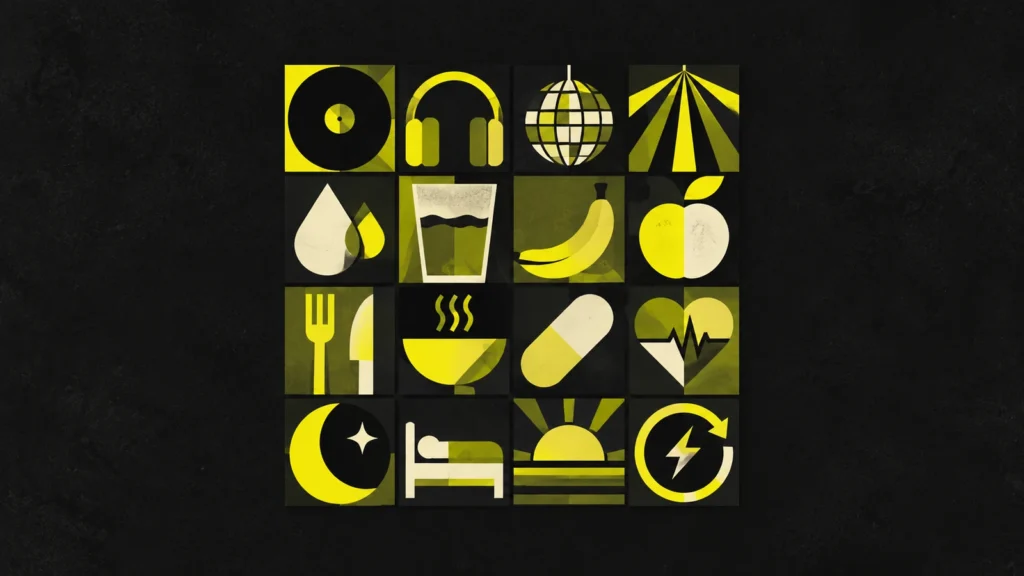
That’s the idea behind The Rave Diet: not a restrictive diet or a magic hangover cure, but a realistic way to look after yourself before, during and after a big night. Whether you’re coming home from an all-night techno session, an outdoor festival or a three-day EDC weekend, the basics should be simple enough to follow when you’re exhausted.
The Rave Diet: a quick recovery checklist
- Cool down first. Stop dancing, get somewhere cooler and take a moment to assess how you feel.
- Drink steadily, not excessively. Water is usually fine. After prolonged heavy sweating, an electrolyte drink or food containing salt can help replace losses. Do not force large volumes of water.
- Eat something manageable. Combine carbohydrate and protein if possible; if your stomach is unsettled, start with toast, banana, crackers, soup or another simple food.
- Get home safely and sleep. Don’t drive if you are impaired or struggling to stay awake.
- Watch for danger signs. Confusion, collapse, seizures, extreme overheating or symptoms that rapidly worsen require urgent medical attention, not a recovery smoothie.
The NHS recommends an overall balanced diet, while CDC guidance emphasises cooling, sensible hydration and recognising heat-related illness. Neither suggests a single food or supplement can undo sleep deprivation, intoxication or overheating. NHS Eatwell Guide · CDC heat illness guidance.
Why you feel drained after a rave
Good raves are physically demanding. Hours spent moving, standing in queues, travelling, staying awake late and possibly sweating in a hot crowd can leave you tired, hungry and thirsty. Alcohol and other substances can add their own risks and after-effects, but you do not need to have taken anything to feel exhausted after a night out.
There is no medically defined condition called a “rave hangover.” That phrase can describe very different experiences: tired legs after dancing, a disrupted sleep schedule, alcohol-related symptoms, dehydration, overheating, anxiety or the effects of other drugs. Treating them all as one simple nutritional deficiency is misleading.
Food and rest can support ordinary recovery. But if you feel seriously unwell, don’t assume that eating a banana or taking electrolytes will solve it. See the warning signs below.
Hydration after a rave: water, electrolytes and what to avoid
Start with water and an ordinary meal
For most people who have been dancing and sweating, water alongside regular food is a sensible starting point. Regular meals provide sodium and other minerals, so a specialist recovery product isn’t automatically necessary. The NHS recommends using thirst and other signs of hydration as guides; pale-yellow urine is often a useful general indicator, although it is not a medical test.
The CDC’s occupational heat guidance notes that ordinary meals with water are typically sufficient for fluid and electrolyte balance. Sports drinks with balanced electrolytes can be another option during prolonged sweating. They are not inherently better than water for every person or every night. CDC/NIOSH hydration guidance.
When might an electrolyte drink help?
If you have been sweating heavily for hours, have not eaten much, or are recovering from a hot festival environment, a normal meal, soup or a suitable electrolyte drink may be practical. Sodium is particularly relevant to salt lost in sweat; coconut water and bananas supply potassium but are not equivalent to a balanced electrolyte replacement drink.
You do not need expensive packets to follow this advice. A sandwich, a bowl of soup and water may be easier on your wallet and just as useful for ordinary post-exercise recovery. Follow product instructions if using an electrolyte drink, especially if you have kidney, heart or fluid-balance conditions.
Can you drink too much water?
Yes. Drinking excessive amounts of plain water can dangerously lower blood sodium. The risk is especially important in hot dance environments when MDMA or other substances may be involved. Do not try to “flush out” substances by drinking litres of water, or drink a fixed large amount just because someone on social media recommends it.
The UK’s FRANK ecstasy/MDMA information warns about both dehydration and overhydration. If someone is confused, repeatedly vomiting, having a seizure or collapsing, seek emergency help rather than encouraging more fluids.
Signs that dehydration may be a problem
Thirst, a dry mouth, darker urine, headache, light-headedness and urinating less frequently can be signs of dehydration. Stop activity, get somewhere cool and drink sensibly. If symptoms persist or worsen, seek medical advice. The NHS dehydration guide explains the common warning signs.
What are the best foods to eat after a rave?
There is no scientifically established “best rave recovery meal.” The useful principle is to replace energy, include some protein and eat a range of foods that you can tolerate. These examples are practical combinations, not medically tested hangover cures.
1. Eggs or tofu on toast with fruit
Toast provides carbohydrate, while eggs or scrambled tofu provide protein. Add a banana, orange or other fruit if you’re hungry. This is an easy breakfast after a late night, especially if cooking feels like a major task.
2. A rice bowl with chicken, beans or tempeh
Rice or another grain gives you energy, and chicken, lentils, beans or tempeh add protein. Add vegetables and a dressing you enjoy. Use frozen vegetables and microwave rice if you’re tired: convenience doesn’t cancel out nutritional value.
3. Soup, noodles or a comforting bowl of pho
Warm broth, noodles, vegetables and tofu, egg or meat can be appealing after a long, sweaty night. Soup contributes fluid and often sodium. It isn’t a universal cure, but it is a realistic option when you want something easy to eat.
4. Greek yoghurt or a plant-based alternative with oats and berries
Yoghurt, fortified soy yoghurt or another suitable alternative, mixed with oats, fruit and nuts, can be prepared in minutes. Choose a protein-containing option if you’re using a plant-based alternative. This is convenient after a night of dancing when your appetite hasn’t fully returned.
5. A banana-and-oats smoothie
Blend a banana, oats, milk or a fortified soy drink, and optionally berries or nut butter. A smoothie can be easier than a large meal if you’re tired. Treat it as food, not a substitute for medical treatment, and remember that fruit and vegetables in their usual forms also matter in a balanced diet.
6. A simple sandwich or wrap
Wholegrain bread or a wrap with hummus, cheese, eggs, chicken or beans is quick, portable and inexpensive. Add vegetables or a piece of fruit. If it’s nearly sunrise and everything is closed, a normal supermarket sandwich is a perfectly reasonable alternative to a complicated “recovery bowl.”
7. Potatoes, vegetables and a protein you like
Baked potatoes, leftover roast vegetables and beans, fish, meat or tofu make a substantial meal when your appetite returns. You don’t need to hit a precise ratio of nutrients. The NHS Eatwell Guide focuses on a balanced pattern over days and weeks, not an immaculate plate after every night out. Source: NHS.
Why carbs, protein, fats and fruit matter
Carbohydrates: replacing energy
After several hours of dancing, bread, oats, rice, potatoes, pasta and fruit are useful sources of carbohydrate. You don’t need to avoid carbs because you’ve eaten late. Choose whatever feels manageable, especially if you have another long day ahead.
Protein: everyday muscle repair
Protein-containing foods support normal tissue maintenance and repair. Eggs, yoghurt, beans, lentils, fish, chicken, tofu and tempeh are good options. That doesn’t mean you need a giant protein shake after every two-hour club set.
Fats: part of a balanced meal
Olive oil, avocado, nuts and seeds provide useful dietary fats and can make meals satisfying. You don’t need to eat a special high-fat meal to “repair your brain” after a rave; claims like that go beyond the evidence.
Fruit and vegetables: variety rather than a miracle antioxidant
Berries, greens, peppers and other produce contribute fibre, vitamins and minerals. They are worthwhile parts of everyday eating, but a vitamin C smoothie is not a proven antidote to partying, drug-related harm or a disrupted sleep cycle.
What to eat before, during and after a long festival
A little planning often makes more difference than searching for the perfect food once you’re already exhausted. Here’s a flexible approach for a regular overnight event or a multi-day festival.
| When | Practical food or drink | Why it can help |
|---|---|---|
| Before you go | A normal meal with carbs, protein and vegetables; water | You start the night fed rather than relying on snacks or stimulants |
| During the event | Access to drinking water; a snack or meal when hungry | Supports normal hydration and energy during a long day |
| When you get back | Water taken sensibly, toast or soup, or a full meal if hungry | Simple food is easier when you are tired; sleep still matters |
| The next day | Regular meals, fruit and vegetables, enough fluid and rest | Helps you return to normal eating and sleeping habits |
For EDC or another three-day event, consider buying breakfast supplies, fruit, easy-to-prepare proteins and water ahead of time. Food availability, heat, travel and accommodation can all affect your choices. You don’t need a rigid “rave diet plan” or a bag full of expensive supplements.
Do you have to eat within 30 minutes after a rave?
No strict 30-minute rule applies to an ordinary club night. Sports nutrition guidance discusses early refuelling after demanding exercise, especially when an athlete is training or competing again soon. That is not the same as evidence that a clubgoer must eat within 30–60 minutes or their recovery will fail.
Eat when you can do so comfortably. If you’re hungry and able to eat, a normal meal makes sense. If you’re nauseated or your appetite is low, start with something light and return to ordinary meals as you feel better. Don’t force a large meal immediately before lying down if it makes you uncomfortable.
The NSW Institute of Sport discusses why timing can matter for repeated athletic effort, while the NHS emphasises balanced eating across the day or week.
Sleep is part of The Rave Diet, even though it isn’t food
It is hard to feel normal after being awake most of the night. A meal can help with hunger, but it cannot replace sleep. If you have been out until morning, make room for rest and give yourself a safe journey home.
- Don’t drive sleepy or impaired. Use a taxi, public transport or a sober designated driver when necessary.
- Make your room suitable for daytime sleep. Curtains or an eye mask, a cool temperature and fewer interruptions can help.
- Avoid using alcohol as a sleep aid. It can disrupt sleep quality.
- Be cautious with late caffeine or energy drinks. They can make it harder to rest when you get home.
- Give yourself a low-pressure recovery day. Gentle movement is fine if you feel well, but don’t force intense training when exhausted.
These recommendations are consistent with UK HSE guidance for people recovering from overnight work and the NHS advice on sleep and insomnia.
Do you need supplements after a rave?
Usually, no special supplement routine is necessary for ordinary post-rave recovery. Advertisements for “rave recovery stacks” often combine vitamins, magnesium and other products with claims that are much stronger than the evidence. Supplements can be appropriate for a diagnosed deficiency or a specific medical need, but that is different from selling them as a cure for a rave hangover.
What about magnesium, multivitamins and vitamin C?
These are nutrients that matter in normal health, and food sources are widely available. But taking extra doses after a party has not been shown to cancel out alcohol, drugs, sleep loss or heat stress. If you’re concerned about a deficiency or take medication, speak with a clinician or pharmacist rather than experimenting with combinations.
What about 5-HTP after MDMA?
We do not recommend using 5-HTP as a self-directed post-MDMA recovery treatment. Evidence for its benefits is inconclusive, and it can interact with medicines that affect serotonin, including some antidepressants, creating a risk of serotonin syndrome. There is no proven supplement schedule that makes MDMA use safe or reliably prevents a comedown. If you take antidepressants or other medication, do not add 5-HTP without qualified medical advice.
See Poison Control’s 5-HTP safety review and the Memorial Sloan Kettering evidence and interaction summary.
Can food cure a rave hangover or comedown?
No particular meal has been shown to reliably prevent or cure what people call a rave hangover. If you’re simply tired and hungry after dancing, food, fluid and sleep are sensible. If alcohol was involved, symptoms may also reflect alcohol’s effects. If other substances were involved, the possible causes and risks are different again.
It is particularly important not to treat serious drug-related symptoms with vitamins, electrolytes or internet “detox” advice. Nutrition is supportive, not a substitute for medical assessment. The UK’s FRANK explains key risks from MDMA, including unpredictable contents, overheating and dangerous fluid imbalance.
When you should get medical help instead of trying another recovery food
Seek emergency medical help for: confusion or a rapidly changing mental state; seizures; collapse or loss of consciousness; severe overheating; difficulty breathing; or someone who cannot be safely awakened. These can be signs of potentially serious conditions, and friends should not leave the person alone. If they are unconscious or cannot swallow safely, do not give them food or drink.
Persistent vomiting, worsening dizziness, severe weakness, or symptoms that do not improve after cooling and rest also need prompt medical assessment. Do not assume the person is “just hungover.”
See the CDC guide to heat-related illnesses and NHS dehydration advice. In an emergency, call your local emergency service.
The Rave Diet: frequently asked questions
What’s the best breakfast after an all-night rave?
Eggs or tofu on toast, yoghurt with oats and fruit, or a simple sandwich are practical options. If you’re not hungry, try something smaller first. What matters is eating enough overall, not finding the one perfect breakfast.
Is a banana good after a rave?
Yes, a banana is an easy source of carbohydrate and potassium. It can be a useful snack, but it does not replace sodium lost during prolonged sweating or treat dehydration by itself.
Should I drink coconut water or an electrolyte drink?
Either can be enjoyable, but neither is mandatory. Water plus food is often sufficient. If you have had unusually prolonged heavy sweating, a balanced electrolyte drink may be helpful. Coconut water contains potassium but is usually not a substantial source of sodium.
What if I feel too sick to eat?
Rest in a cool place and try small amounts of simple food and sensible sips of fluid if you can swallow safely. If vomiting continues, symptoms worsen or you feel severely unwell, seek medical assessment rather than forcing yourself to eat.
How long does it take to recover from a festival?
There is no universal recovery time. It depends on sleep, physical effort, travel, heat, nutrition, alcohol or other substances, and underlying health. Feeling unwell for an unusually long time deserves attention rather than assuming it is part of festival life.
Are vitamins or 5-HTP a good rave recovery shortcut?
No supplement can reliably undo a night without sleep or prevent drug-related harm. In particular, 5-HTP can interact with serotonin-affecting medicines. Speak to a qualified healthcare professional about supplements if you have a specific need.
What should I eat at EDC or a multi-day music festival?
Plan regular meals when possible, bring or buy accessible snacks, keep water available and make sure you have food for the next morning. Carbohydrates, protein and some produce are sensible components. Don’t rely on skipping meals and then trying to “recover” with supplements.
The Rave Diet: rave responsibly, recover realistically
Techno and rave culture can take you through extraordinary nights. Looking after yourself afterwards doesn’t need to become another complicated project. Eat real food. Drink sensibly. Rest. Respect your limits. Look after your friends. Those habits matter more than an expensive recovery stack or an invented nutritional deadline.
If you want more culture and practical advice, explore Rave in London? Rave Responsibly, the history of rave culture, or our guide to techno subgenres.
Sources and editorial notes
This revision keeps the original Rave Diet concept while correcting unsupported supplement claims and adding a clearer distinction between ordinary fatigue and medical warning signs. It draws on the NHS Eatwell Guide, NHS dehydration advice, CDC/NIOSH hydration guidance, CDC heat illness information, FRANK’s MDMA guidance, and Poison Control’s 5-HTP review. It is editorial guidance, not individual medical advice.