Is Sitala still a free drum VST? Yes, but only the older Sitala 1.0 release is free. Decomposer still provides it through the official Sitala download page. The actively developed Sitala 2 line requires a $20 licence and adds modern workflow and compatibility features. This distinction matters if you are searching for a genuinely free drum sampler in 2026.
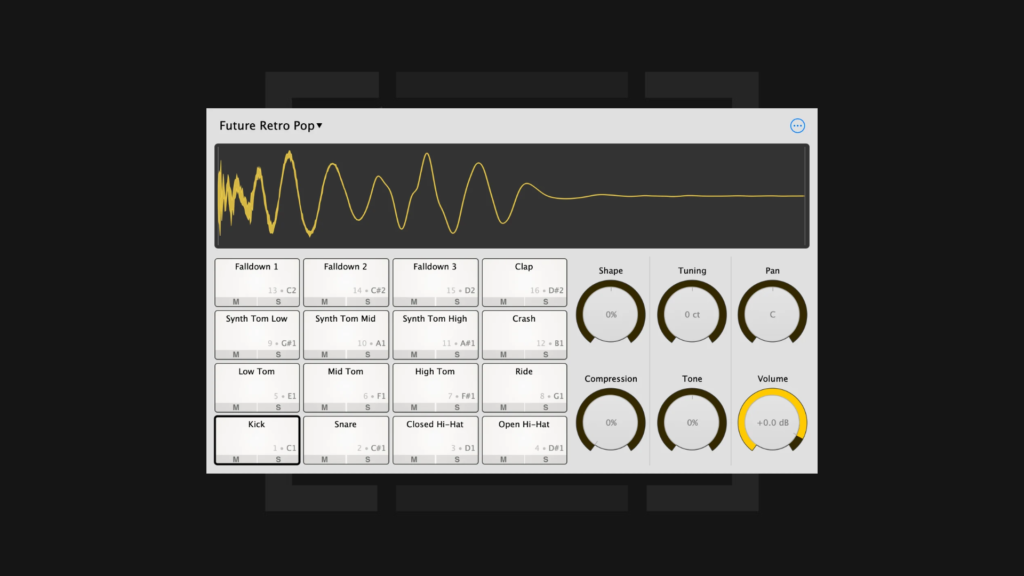
Sitala is a compact 16-pad drum sampler, made for loading and shaping one-shot kicks, claps, hats, snares and percussion. It isn’t a full drum synthesizer, a complete sequencer or a giant sample library. Its appeal is the speed with which you can drag your own samples onto pads, adjust six musical controls and trigger a beat from MIDI inside your DAW.
We’ll explain which edition to download, what each control actually does, how to install Sitala on Windows or Mac, and how to program a simple techno groove. We’ll also cover multi-output routing, the differences between 1.0 and 2.x, missing samples and the limitations worth knowing before choosing a sampler.
Checked 31 October 2026 against Decomposer’s official product page, FAQ, download listings and Sitala 2.1 manual. The main download page currently advertises Sitala 2.1.1, while Decomposer’s official release directory also contains 2.1.2 installers. We recommend using the developer’s primary download page and checking its version label, rather than assuming that a numbered archive file represents a newly announced stable release.
Sitala at a glance: free version, price and compatibility
| Question | Verified answer |
|---|---|
| Developer | Decomposer |
| Free version | Sitala 1.0, build 1.0.9, originally released February 2021; still distributed by the developer |
| Paid version | Sitala 2.x, listed at $20 for a desktop licence when checked |
| Sound engine | 16 sample-trigger pads; each pad plays one sample, with six sound-shaping controls |
| Sequencer | No built-in step sequencer; MIDI notes and patterns come from your DAW or controller |
| Free 1.0 desktop support | Historical macOS, Windows 32/64-bit and Ubuntu Linux builds; compatibility with current hosts should be tested |
| Paid 2.x desktop support | macOS (Intel and Apple Silicon) and 64-bit Windows 10 or newer; modern VST3, VST, AU on Mac, and AAX formats as documented |
| Linux today | A legacy free 1.0 build is available; the current paid branch does not support Linux |
| Official download | decomposer.de/sitala/ — both paid and older free sections |
Decomposer explicitly states in its FAQ that the old free version is not being withdrawn. It is a separate older edition, not a time-limited trial of the paid release. Sitala 2’s licence is sold through the developer’s own checkout; iOS purchases are handled separately in the App Store.
The feature and platform lists below distinguish older 1.0 functionality from the current 2.x manual. Do not assume a five-year-old free binary supports every modern DAW feature or Apple Silicon natively.
What is Sitala, and who is it for?
Sitala is a drum sample player that turns a folder of one-shots into a playable instrument. Load a kick onto one pad, a clap onto another and hats onto the next few pads; each can have its own tuning, tone, compression, shape, volume and pan settings. Your DAW sends MIDI notes to trigger the pads, and Sitala returns the audio.
That makes it attractive for techno, electro, house, hip-hop, breakbeat and sound-design sessions where you want direct control over a small kit without opening a full sampler editor for every hit. You can use the included 808-style content or licensed samples from your own collection. The larger paid branch adds more kit-management and workflow features, but the basic idea remains the same.
What Sitala does not do: Decomposer’s current manual says there are 16 pads per instance, no built-in sequencer, and no chromatic melodic-sampler mode. A pad triggers one sample at a time; you cannot build a multi-sample velocity-layered instrument inside one pad in the way you would with a more complex sampler. If you need more pads, load another instance. If you want long melodic multisampling, choose a different instrument.
Sitala’s simplicity is a design decision, not a flaw. It works best when the goal is to assemble and process a few decisive drum sounds, not build a large orchestral-style sample instrument.
Sitala 1.0 versus Sitala 2: what actually changed?
The original Underground Talent article described Sitala as if every available version were free and supported every modern DAW without limitation. That is no longer accurate. The developer moved to a paid 2.0 release in June 2023 and updated the paid line in 2026, while keeping 1.0 available.
| Feature | Free Sitala 1.0 | Paid Sitala 2.x |
|---|---|---|
| Cost | Free to download and use | $20 desktop licence, subject to current checkout |
| 16 sample pads and six controls | Yes | Yes |
| Drag and drop, MIDI triggering and kit creation | Yes | Yes, with newer browsing and kit features |
| Four-by-four pad layout | Legacy interface | New MPC-style 4×4 option/default |
| VST3 and native Apple Silicon | Not advertised for the legacy release | Yes |
| New factory kits and dark mode | Original factory content and appearance | Expanded factory kits, dark mode |
| 2026 workflow additions | Not part of the frozen 1.0 release | Pitch-note snapping, kit switching via MIDI, improved sample recovery and offline activation |
| Current Linux release | Historical Ubuntu build remains downloadable | Not supported |
Decomposer’s release information and activation manual establish the licensing distinction. The Sitala 2.1 changes are aimed particularly at faster sample handling, tuned percussion and keeping projects portable, including tighter integration with REAPER.
Which version should you choose?
Choose free 1.0 when you want a straightforward no-cost 16-pad player and have checked that your operating system and DAW can run its legacy format. Choose paid 2.x if you need VST3, documented native Apple Silicon support, current Windows/macOS compatibility, the newer pad layout, or the advanced sample-recovery features. Spending $20 will not write better drum patterns for you, but modern host compatibility may be worth it.
If you rely on older projects, save copies before changing versions. Do not assume a session using a legacy plug-in identity will automatically replace every instance or recall every preset correctly in a newer major release. Test project reopen and sample recall in a disposable copy first.
How Sitala’s six controls shape a drum sound
Select a pad, audition its sample and work with the controls in context. Decomposer designed them as musical macro controls rather than a dense collection of separate processor parameters. The current sample-editing documentation explains the editing workflow; exact graphical behaviour may differ between 1.0 and 2.x.
Shape: attack and tail, not a conventional ADSR editor
Shape changes the envelope of the selected sound, making it punchier, softer, shorter or longer depending on the sample and setting. It is not four independent Attack, Decay, Sustain and Release knobs. The original article incorrectly described it as a full ADSR panel. Use Shape to tighten a long kick tail, shorten a hi-hat or soften a sharp transient; judge the result against the entire groove.
Compression: change dynamics without blindly adding loudness
Compression changes the hit’s dynamics and sustain, with automatic gain compensation intended to keep perceived level more consistent. That makes it easier to compare a punchier sound with the unprocessed version. Compression is not a guarantee of a stronger mix: too much may flatten transients or make a short percussion hit feel unnaturally sustained.
Tuning: pitch the sample to the track
Tuning raises or lowers the sound’s pitch by up to about an octave. Try small movements on toms and pitched kicks to work with your bassline; do not assume every kick has a clearly identifiable musical note. The paid 2.1 generation includes pitch-note labels and snapping, useful for intentionally tuned percussion.
Tone: emphasise highs, lows or midrange
Tone changes the spectral balance. Depending on the source, you might make a hat less harsh, bring out the attack of a clap or remove some boxiness from a percussion sample. It is a broad musical macro, not a substitute for a fully parametric EQ. Use external processing when you need a precise corrective notch.
Volume and Pan: give every hit its place
Volume sets the pad level and Pan positions it in the stereo image. Try centring the main kick and keeping supporting percussion slightly wider where that helps the mix. Panning does not create space if everything is already too loud. A balanced kit should sound intentional without relying on the master limiter.
One sample per pad is a useful boundary. If you want to layer a clap and a noise burst, use separate pads triggered by the same MIDI note where mapping allows, or bounce a layered sound to a new audio file. You cannot simply drag several samples into one pad and expect a velocity-layered instrument to appear.
How to download and install Sitala safely
Use the official Decomposer Sitala page. Scroll to the Downloads section, choose either the licensed 2.x release or the older free 1.0 download, and select the installer for your operating system. Avoid random repackaged “free Sitala 2” installers; the developer does not describe the paid version as free.
Windows: the format matters
- Confirm you use a 64-bit Windows DAW and check the exact system requirements. Sitala 2.x requires Windows 10 or newer, 64-bit; free 1.0 also has historical 32-bit packages.
- Download the appropriate official installer and read its installation choices.
- For modern Sitala 2.x, the VST3 plug-in is normally installed under
C:Program FilesCommon FilesVST3. The old VST2 location can depend on the installer and DAW scan path. - Restart the DAW or perform its plug-in scan. Look for Sitala by Decomposer under instruments, not audio effects.
- Create a MIDI/instrument track, load Sitala, trigger a few pads and save/reopen a test project.
If using free 1.0, do not expect an official VST3 option or universal native compatibility with current VST3-only workflows. For the differences between VST2 and VST3 installation, see our VST installation guide.
macOS: Intel, Apple Silicon and Audio Units
The paid 2.x version documents native Apple Silicon support on compatible macOS versions and offers AU, VST, VST3 and AAX as appropriate. The official current manual lists macOS 10.12+ for Intel systems and macOS 11+ for Apple Silicon. The historical free 1.0 Mac release predates those native Apple Silicon claims, so test it in your particular DAW and operating system rather than assuming a perfect experience.
When using Logic Pro, look for the Audio Unit version of the plug-in. A VST file is not the same as an AU component. On Mac, the current manual identifies standard locations such as /Library/Audio/Plug-Ins/Components for AU and /Library/Audio/Plug-Ins/VST3 for VST3. Follow the installer instructions and never bypass operating-system security warnings just to load an unknown plug-in package.
Linux and mobile editions
The developer retains a historical Ubuntu Linux 20.04 standalone/VST package for Sitala 1.0. The paid current branch does not officially support Linux. That does not mean every Linux distribution or current DAW configuration will work with the old package; treat this as a legacy option rather than active modern Linux support.
Sitala also has iPad/iPhone versions, with separate App Store licensing. A $20 desktop licence is not an automatic purchase of the mobile app. Check the official mobile download listing for availability and requirements.
Build your first 16-pad Sitala drum kit
Start with a modest set of good one-shot samples, ideally WAV or AIFF files from a licensed pack or your own recordings. Sitala 2.1 supports additional source formats as documented in its getting-started manual, but WAV is a useful portable default for a basic kit.
- Insert Sitala onto an instrument track in your DAW. Choose a factory kit to explore it, or create a new empty kit.
- Drag a solid kick one-shot onto pad 1. Keep its tail controlled and do not turn up the pad simply because it is the kick.
- Add a clap or snare to pad 2, short closed hat to pad 3 and open hat to pad 4.
- Use additional pads for a rim, shaker, metallic hit, tom and a few different kick/clap alternatives.
- Rename pads so the instrument and MIDI editor make sense without memorising file names.
- Adjust Shape, Tuning, Tone and level by ear. Keep the main low-frequency elements controlled before adding additional layers.
- Save the kit for reuse, and save your DAW project with all sample dependencies available.
Decomposer’s current MIDI documentation maps the default chromatic layout to MIDI notes 36–51 for the sixteen pads. Note 36 may be called C1, C2 or C3 depending on the DAW’s octave-naming convention; the underlying MIDI number is the same. This is a frequent source of confusion when a tutorial says to program C1 and you cannot hear the expected pad.
Program a techno beat with Sitala: 128 BPM example
Sitala does not contain its own internal sequencer. Use the piano roll, MIDI clip editor or step sequencer in your DAW to trigger the pads. The pattern below is an original illustrative starting point for a conventional 4/4 techno groove, not a factory preset or a statement about all techno styles.
| Pad / drum | 16-step pattern | What it does |
|---|---|---|
| Kick | 1, 5, 9, 13 | Four-on-the-floor foundation |
| Clap / snare | 5, 13 | Backbeat on beats two and four |
| Open hi-hat | 3, 7, 11, 15 | Offbeat eighth-note accents |
| Closed hi-hat / shaker | 4, 8, 12, 16 (optional) | Light movement between the larger accents |
| Rim or metallic percussion | 7, 15 or a variation | Creates an answering rhythm without overcrowding the bar |
Program the kick first, then add hats and clap, finally introducing one extra percussion voice. At 128 BPM, a single 4/4 bar lasts 1.875 seconds. Loop four or eight bars and change the velocity or timing of a supporting hit every other bar. You can also replace the basic kick with a broken rhythm: techno is not confined to one grid.
Make the groove less mechanical without randomising everything
Adjust the velocity of hats or ghosts, slightly offset selected notes if that complements your chosen sound, and leave the main kick stable. Too much swing on every element can make the groove unstable. A better approach is to choose a rhythmic relationship between the kick and one supporting sound and develop that deliberately.
Shape a convincing kick and clap
If the kick has a long boomy tail, use Shape to shorten it before layering a new bassline. If the clap is harsh, reduce its Tone brightness or overall level rather than adding compression by default. Compare the full drum loop with each change bypassed. For deeper advice on balancing percussion, read our drum and percussion mixing guide.
Make a kit your own without needing hundreds of samples
Try three deliberately contrasting kits: one dry and minimal, one metallic and industrial, and one warmer/dub-oriented. Keep the MIDI rhythm constant while swapping sounds. This is a useful way to hear how sample length, spectral balance and transient character change a groove without changing the note pattern.
If you need suitable one-shots, our Free Techno Tools V2 article is another place to begin; check the pack’s usage licence and its download conditions rather than assuming every sample on the internet is free for commercial redistribution.
MIDI mapping, choke groups and live performance
The pad layout is only a visual interface; Sitala receives MIDI notes from your DAW or controller. If a MIDI keyboard triggers the wrong sound, compare the actual MIDI note number rather than relying solely on octave labels. The current Decomposer MIDI manual explains the default note mapping and MIDI Learn.
Mapping a controller
Connect a MIDI controller, enable its input in the DAW, create or arm the Sitala instrument track and confirm that clicking a pad makes audio. Then use the controller’s pad notes or Sitala’s supported MIDI mapping options to line up your preferred physical pads. Test all assigned pads before using the kit in a live set.
Make closed and open hats behave naturally
Many drum grooves benefit when an open hi-hat stops as a closed hat starts. Sitala’s trigger/choke facilities allow this type of interaction on supported builds: see the pads manual. Set the relevant pads to a suitable choke relationship and audition the pattern rather than letting overlapping long hat samples fill the whole bar.
Do not switch kits untested onstage
The paid 2.1 update includes kit changes through MIDI program/control signals and better sample management. That can be useful for live sets, but switching kits can change timbre, mapping, memory use and output routing. Test the entire performance chain and keep a fallback before relying on it during a set.
Route Sitala pads to separate mixer channels
A single stereo Sitala output is convenient when you only want a kit that behaves as one instrument. For detailed mixing, supported Sitala builds can send individual pads through separate stereo outputs to your DAW. The developer documents 16 stereo output pairs, one per pad, but your host must actually expose and route them.
On the current version, switch Sitala’s audio output mode to the multi-output option and configure receiving channels in the DAW. In REAPER, the integration can create and name pad tracks automatically. Ableton Live uses additional audio tracks that take their input from the appropriate Sitala output. Logic creates auxiliary channels; FL Studio uses the plug-in wrapper’s output routing.
Decomposer has a step-by-step multi-output manual for REAPER, Ableton Live, Logic Pro, Pro Tools, Bitwig and FL Studio. Follow the appropriate section for your version and format. The DAW track carrying the instrument may behave differently once the pads route to individual outputs. In Live, for example, a pad can appear silent if you switch to multi-out without creating an audio track to receive its output.
Once routed, you can put a dedicated compressor on the kick, a short room reverb on the clap and a delay only on the metallic percussion. This is more precise than compressing or reverberating every hit through one stereo channel. If you’re new to routing, start with stereo mode, finish a beat, and return to multi-out when you have a specific mixing problem to solve.
Managing kits, sample locations and portability
It is tempting to build a kit using samples scattered across Downloads, removable drives and temporary folders. That can work until you move a project or open it on a different computer. A sampler can remember pad settings without being able to find the original WAV files after they are moved.
The current Sitala 2.1 manual explains that the plug-in saves its state inside a DAW project, but the project may still reference samples stored elsewhere. Sitala 2.1 includes improved missing-sample searches and REAPER-specific sample collection into project folders. Elsewhere, you can save a kit alongside your project and keep an organised copy of the underlying sounds. See the official kit documentation.
A reliable sample folder structure
Keep a simple folder arrangement such as Projects / Track Name / Samples / Drums, plus exported kits and project backups. If you use a third-party sample pack, retain its licence and original archive. Keep the actual sample files until you have verified that the project or kit opens on another machine. Reopen an archived project once before deleting temporary files.
What happens when samples go missing?
In newer paid versions, Sitala can search indexed files and offer guided relinking when samples move. This is not a substitute for backups or a promise that every missing sound can be recovered. Legacy 1.0 installations do not include all the 2.1 recovery functions. If a project opens with empty pads, check whether an external drive is disconnected before rebuilding the kit from scratch.
Sitala versus drum racks and other free drum tools
Sitala is particularly strong when you want one focused sample per pad and quick sound shaping. If your primary need is to generate analogue-style drum synthesis, build complex sample layers, or create patterns inside the plug-in, another instrument may fit better. The useful comparison is by workflow, not by claiming a plugin is universally better.
| Approach | When it makes sense | Trade-off |
|---|---|---|
| Sitala 1.0 (free) | Fast small sample kits on a compatible legacy host | Older format support; no active 2.x features |
| Sitala 2.x ($20 listed) | Same minimal workflow with current desktop formats, 4×4 layout and easier kit handling | Paid licence; still no internal sequencer or deep multisampling |
| DAW’s own drum rack / sampler | Integrated MIDI sequencing, routing and effects inside a specific workstation | Workflow and features depend on the DAW and installed edition |
| Dedicated drum synthesizer | Creating kicks and percussion from oscillators, envelopes or physical modelling | Usually a different kind of sound-design workflow from dropping in audio samples |
If you already enjoy your DAW’s drum rack, you may not need Sitala. Conversely, if you are overwhelmed by large sampling systems and want to load a kit in seconds, its restraint is useful. Underground Talent’s techno production guide explores the wider workflow around sampling, synthesis and arrangement.
Sitala troubleshooting: missing plugin, no sound or empty kits
Sitala does not appear in my DAW
Look in the instrument list rather than effects, check which formats your DAW scans and confirm that the plug-in architecture matches the host. For paid 2.x, rescan the default VST3 or AU location as applicable. For free 1.0, remember that the supported formats differ from the current paid release. Restart the DAW and test the standalone app separately to isolate an installation from a plug-in-scanning issue.
Clicking pads works but MIDI does not
Check that the MIDI instrument track is armed or monitored, that the controller is enabled, and that you are sending the expected notes. Sitala’s default chromatic mapping begins at MIDI note number 36. An octave label such as C1 in one DAW may appear as C3 in another without the underlying MIDI note changing.
One or more pads are silent in multi-output mode
Confirm that each pad’s output has a receiving DAW channel. Decomposer warns that in hosts such as Ableton Live a pad can be silent when its separate output is not routed anywhere. Return to the ordinary stereo output while troubleshooting if you do not yet need individual drum channels.
The kit loads but samples are missing
Reconnect external drives and check the original sample location first. In newer Sitala 2.1 builds, use the missing-sample recovery tools. In older 1.0, you may need to locate the source files manually. Keep a portable sample archive and do not rely solely on a plug-in instance as a backup of your sound library.
Sitala 2 asks for a serial number
That is expected: the modern branch requires a paid licence. It is not evidence that the older freeware download has suddenly become a time-limited demo. If you have bought Sitala 2, follow the developer’s activation and offline activation instructions. If you want the free edition, return to the official page and deliberately download the separate Sitala 1.0 package.
Underground Talent verdict: still useful, but choose the correct edition
Sitala gets the important things right for quick drum sample work: sixteen pads, intuitive sound shaping, drag-and-drop loading and the ability to make a beat without spending an hour configuring a sampler. That remains useful whether you are writing a dry hypnotic loop, a rough industrial percussion kit or an electro pattern.
But the free Sitala in old plugin roundups is not the paid Sitala 2 released and updated later. Free 1.0 remains a legitimate download, especially when you have a compatible setup. The $20 2.x branch is the more sensible choice for documented modern Apple Silicon and VST3 support, 2026 sample-management improvements and its updated interface. The developer deserves clear credit for continuing to host the older free build rather than removing it.
Official download: Decomposer — Sitala (free 1.0 and paid 2.x). Check the specific version and host requirements before installing.
Sitala VST FAQ
Is Sitala completely free in 2026?
The original Sitala 1.0 is free and still downloadable from Decomposer. Sitala 2.x requires a paid desktop licence listed at $20. The two branches are not interchangeable in terms of features or modern compatibility.
Does Sitala 1.0 work in modern 64-bit DAWs?
Some combinations can work, but it is an older plug-in with legacy formats. Compatibility depends on the exact DAW, operating system and architecture. The current paid version adds VST3 and documented native Apple Silicon support, which may make it a safer choice for a new computer.
Is there a free VST3 version of Sitala?
The official free 1.0 release does not advertise VST3. Decomposer introduced VST3 support with its paid Sitala 2 branch. Download from the developer rather than searching for unofficially repackaged versions.
Can Sitala play a 16-step drum pattern by itself?
It is a 16-pad sample player, not a built-in 16-step sequencer. Create patterns in your DAW’s MIDI editor, step sequencer or a connected controller, and let those notes trigger the pads.
Can I layer multiple samples on one Sitala pad?
Each pad plays one sample. For a layered kick or clap, put different samples on separate pads and arrange for them to trigger together, or resample a layered sound as a single audio file.
Does Sitala include 808 samples?
Yes, the developer lists an 808-style kit. The paid branch also advertises additional factory kits. You can replace factory sounds with legally obtained one-shots and save your own reusable kit.
Does Sitala work on Linux?
Decomposer still offers a historical Sitala 1.0 Ubuntu Linux package. The newer paid Sitala 2 branch does not officially support Linux. Test the legacy build on your particular distribution instead of assuming full modern compatibility.
Can I use Sitala on an Apple Silicon Mac?
Sitala 2.x documents native Apple Silicon support on macOS 11 and later. The old freeware 1.0 predates that native support and may behave differently depending on the host and compatibility mode. Use the published requirements as the first check.
Does Sitala support separate outputs for every drum?
Yes, in supported configurations. The current official manual describes up to sixteen stereo outputs and shows how to route them in REAPER, Ableton Live, Logic, Pro Tools, Bitwig and FL Studio. The exact setup varies by plug-in format and DAW.
Where is the safest Sitala download?
Use Decomposer’s official website, where the free 1.0 and paid 2.x installers are distinguished. Avoid unrelated download mirrors, modified installers or promises of a free activated Sitala 2 licence.
Sources and technical references
- Decomposer: official Sitala feature and download page, including both free 1.0 and licensed 2.x listings, platform notes and $20 price.
- Decomposer: why Sitala 2 became paid and why Linux and 32-bit Windows support changed.
- Decomposer: Sitala 2.1 manual, describing 16 pads, lack of an internal sequencer, supported formats, macOS/Windows requirements and limitations.
- Decomposer: editing and trimming samples, for sample-level features.
- Decomposer: MIDI note mapping, including the 36–51 pad mapping and different C1/C2/C3 octave naming.
- Decomposer: multiple outputs, with host-specific routing instructions.
- Decomposer: saving kits and keeping samples available.
- Decomposer: activation and updates for paid Sitala.
Version note: Decomposer’s product page displayed version 2.1.1 as the main paid download on 31 October 2026, while its own archive includes more recent 2.1.2 files. This article describes the 2.1 product family rather than promising an exact installer version or undocumented patch feature.