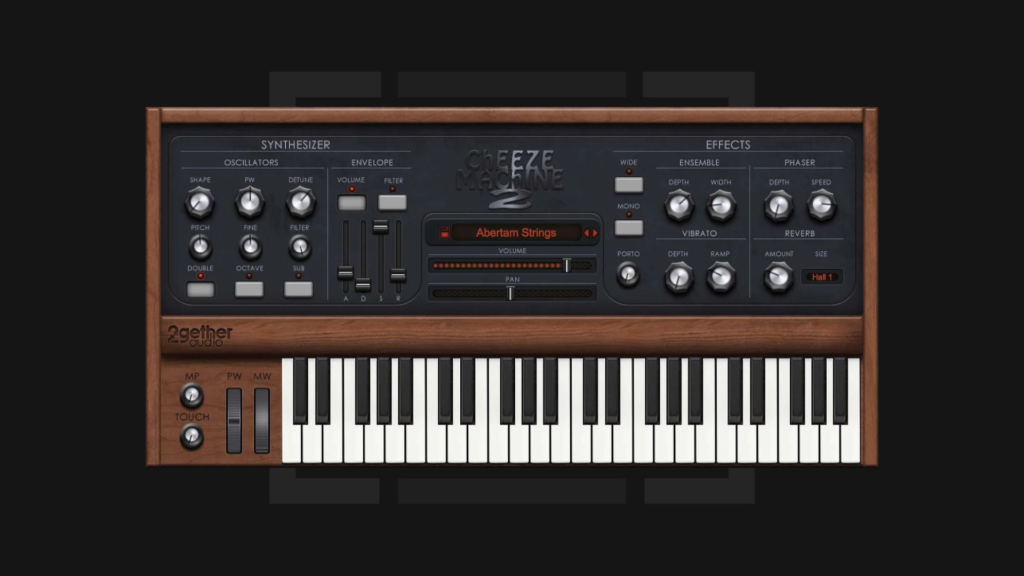
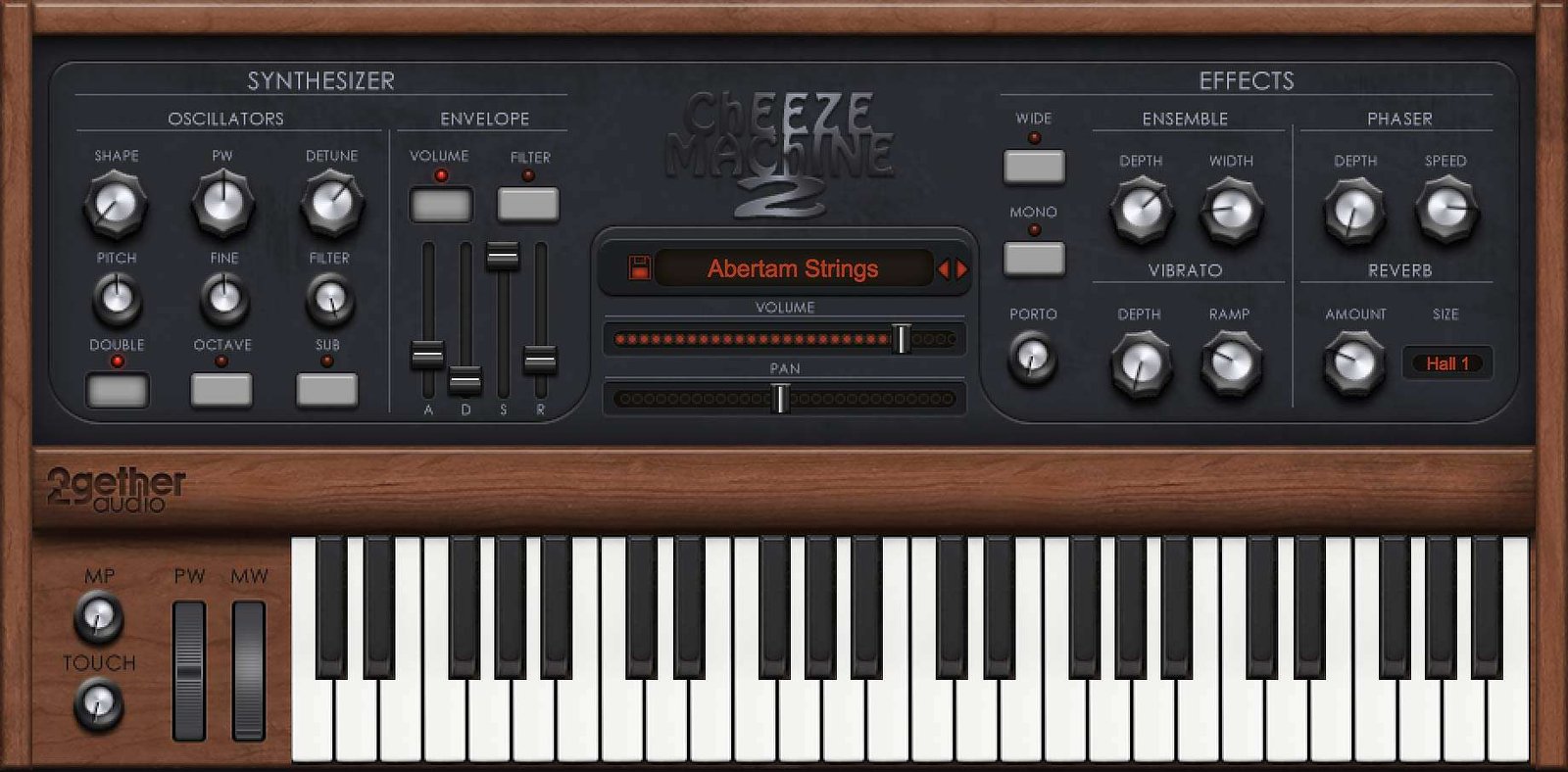
Is Cheeze Machine 2 still a free VST in 2026? Yes. Cheeze Machine 2 by 2getheraudio is still promoted as a free virtual string-machine instrument. It recreates the general character of vintage ensemble keyboards using two virtual-analogue oscillators, a sub-oscillator, independent amplitude and filter envelopes, vintage ensemble/chorus effects, phaser, vibrato and convolution reverb. It is especially useful for string pads, sustained chords and retro synthesizer textures, not an unlimited emulation of every vintage instrument.
There’s a significant update missing from older reviews: the current 2getheraudio support system uses the inMusic Software Center for downloading and authorising updated plug-ins, and the manufacturer’s 2026 compatibility table identifies Cheeze Machine 2 version 1.1.5 with VST3, VST2, AU and AAX support on tested Intel and Apple Silicon Mac systems. The developer also maintains an older free-download request form. Follow the appropriate manufacturer route rather than assuming that an old installer or download button works identically on every computer.
Here is what Cheeze Machine 2 actually does, where to download it, how to make a string-machine patch and how to use those sounds in a techno production. We’ll distinguish the free instrument from Cheeze Machine PRO, check platform limitations and explain how to avoid an installation or activation dead end.
Updated 31 October 2026 using 2getheraudio’s official product and support information. Compatibility describes manufacturer-tested configurations, not independent testing of every DAW, computer or operating-system version.
Cheeze Machine 2 in 2026: quick facts
| Question | Verified answer |
|---|---|
| Developer | 2getheraudio, based on the earlier Cheeze Machine by Big Tick Audio |
| Main instrument type | Virtual string machine / string-ensemble synthesizer |
| Price | Cheeze Machine 2 is advertised as free; Cheeze Machine PRO is a separate commercial product |
| Current manufacturer-listed update | Cheeze Machine 2, version 1.1.5 in the 2026 macOS compatibility table |
| Oscillators | Two virtual-analogue oscillators plus a sub-oscillator; oscillator doubling options |
| Sound shaping | Independent amplitude and filter envelopes, tuning and tone controls, performance modulation |
| Effects | Vintage ensemble/chorus, phaser, vibrato and convolution reverb |
| Factory sounds | More than 60 editable patches, including string ensembles, pads, brass and keyboard textures |
| Windows support | Manufacturer’s updated installation guidance addresses Windows 10/11; older product page also lists historical Windows 8/8.1/10 requirements |
| Mac support | Version 1.1.5 listed as supported on macOS 26 Tahoe on tested Intel and Apple Silicon systems |
| Formats | Updated manufacturer’s table: VST2, VST3, AU (Mac) and AAX, host compatibility permitting |
| Linux | No official Linux release found in the current developer product and support pages |
| Official product | Cheeze Machine 2 at 2getheraudio |
Important: the older product page and the current support system don’t use identical download and pricing interfaces. The official product page prominently calls Cheeze Machine 2 “FREE”, but it also contains older shop/pricing elements and trial-download wording. This article points to the official free request and current update support resources rather than treating a $10 shop option as a mandatory cost or promising a frictionless one-click installer.
What is Cheeze Machine 2?
Cheeze Machine is a lightweight virtual instrument modelled around the vintage string machine: keyboards famous for broad, animated string-like ensembles and chorused, sustained chords. The original Cheeze Machine came from Big Tick Audio. 2getheraudio released its remastered Cheeze Machine 2 in January 2019 with an expanded oscillator section, more effects and 64-bit plug-in support.
Its sound is not the same as a sampled orchestra. It is a synthesised impression of string sections, with deliberate electronic colour, slow motion, ensemble detuning and a familiar retro texture. That makes it useful in ambient, disco, electronic pop and underground dance music, including deep, hypnotic and dub-oriented techno.
There is also a practical advantage to the limited scope. Instead of building a complex modular patch, you can select a string sound, adjust its envelopes and modulation, then arrange it around your drums. This can make Cheeze Machine an effective supporting instrument even if your main bass and percussion come from other synths or samplers.
Where to download Cheeze Machine 2 for free
Start with 2getheraudio’s official Cheeze Machine 2 page. The developer continues to describe the instrument as free. The site also has a dedicated Cheeze Machine 2 Free download form, which asks for a name, email and platform and says the download links are sent by email. That form also says the submitted email is added to 2getheraudio’s mailing list, with an unsubscribe option.
For newer builds, 2getheraudio’s current installation and activation guide explains how existing customers use an inMusic Profile and the inMusic Software Center. An existing 2getheraudio customer should use the email already associated with their original account or follow the password-reset instructions if that account has migrated.
Suggested download procedure
- Open the official product page. Confirm the instrument is Cheeze Machine 2, not the separate Cheeze Machine PRO.
- Choose the free route. If you’re a new user, review the manufacturer’s Cheeze Machine 2 Free form; it asks for contact and platform details. Don’t assume the pricing widget on the legacy product page is your only option.
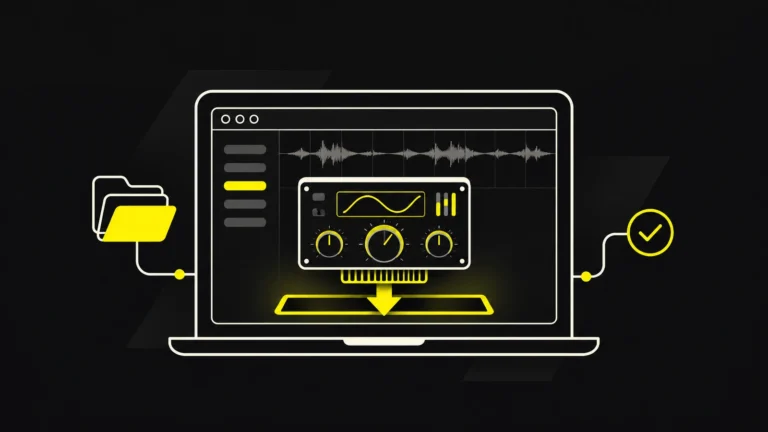
- For a current build, follow the support instructions. The inMusic Software Center download page provides the current installer/management application for Windows and macOS.
- Check entitlement and activation. The support guide describes signing into an inMusic Profile, using “My Software” and installing/activating the product. Existing customers receive updates free; requirements for a new user’s exact free entitlement should be confirmed through the developer’s free-download route.
- Install a supported plug-in format. On a modern 64-bit DAW, VST3 is normally an appropriate first choice if offered. Logic Pro uses AU on macOS. For Pro Tools, choose a compatible AAX version.
- Scan and test. Launch your DAW, rescan instruments if needed, open Cheeze Machine 2, audition a factory string preset and save/reopen a short test project.
Download links: Free Cheeze Machine 2 request · inMusic Software Center · Official product details.
All three manufacturer pages were accessible when checked on 31 October 2026. We have not registered a new account, clicked through an authenticated activation, or installed the latest binary on every operating system. If the free form or new account doesn’t expose the correct installer, contact 2getheraudio support rather than downloading an unofficial cracked or modified copy.
Cheeze Machine 2 compatibility in 2026
The old article claimed Cheeze Machine works seamlessly in “any modern DAW”. That’s too broad. A plug-in format is only useful when the host supports it, the installed build matches the computer architecture, and authorisation succeeds. 2getheraudio has since published newer, more specific compatibility tables.
macOS 26 Tahoe and Apple Silicon
2getheraudio’s macOS 26 Tahoe compatibility list explicitly includes Cheeze Machine 2 version 1.1.5 as supported on tested Intel and Apple Silicon Macs, with VST2, VST3, AU and AAX. This is current evidence that the product hasn’t simply been abandoned with an old Intel-only release.
The same table lists Cheeze Machine PRO version 1.3.5. Don’t mix the two version numbers or claim the paid PRO build is the current free instrument. For a serious production machine, verify your exact Mac, DAW and plug-in format even when the manufacturer lists OS support.
Windows 10 and 11
The developer’s 2025/26 download and authorisation guide describes compatibility of current updates with Windows 10 and 11. The old marketing page still lists Windows 8, 8.1 and 10, but those are historical requirements and should not be presented as proof that the newest Software Center build works on Windows 8.
Use a supported 64-bit DAW, follow the official installer, and check whether your host uses VST3 or another format. An application that scans VST3 instruments may not find an old VST2-only installation without a separate supported VST2 scan path.
Logic, Ableton, REAPER, FL Studio, Cubase and Pro Tools
Cheeze Machine 2 is a software instrument, not an audio-effect processor. Insert it on an instrument/MIDI track, then send it MIDI notes. Logic typically uses AU; Ableton, REAPER, Cubase and FL Studio can use compatible VST formats; Pro Tools requires a compatible AAX plug-in. Not every edition of a DAW supports the same formats, and host-specific behaviour can vary.
If you need help with installation paths and rescanning, see Underground Talent’s VST plug-in installation guide. A plug-in that appears in a product’s supported format list has still not necessarily been independently tested by Underground Talent in every host.
Linux and older systems
The official Cheeze Machine 2 product and 2026 compatibility pages list Windows and macOS, not a Linux download. That doesn’t establish an official supported Linux release. Older 2getheraudio installers are also not automatically interchangeable with the current inMusic Software Center. Keep legacy installers and project backups if your workflow depends on them, and avoid upgrading a working production setup without a recall test.
The Cheeze Machine 2 sound engine explained
Two oscillators, a sub and oscillator doubling
2getheraudio describes two virtual-analogue oscillators plus a sub-oscillator. In practice, the oscillator section supplies the raw tone that becomes a string, brass-like or synthetic ensemble sound. Shape and pulse-width controls change the harmonic character; tuning or detuning the oscillators changes how closely they move together. Oscillator doubling can make the result broader or thicker.
For a warm string bed, begin with a single oscillator and add the second gradually. If your low-frequency mix is already busy, leave the sub-oscillator modest or off. Wider is not always better: a slightly restrained string sound can be easier to mix around a kick, bassline and hats.
Independent amplifier and filter envelopes
The plug-in provides separate envelopes for amplitude (how the sound grows and fades) and filter (how its tone changes over time). Their roles are different. A slower amplifier attack helps a pad swell into the arrangement; a shorter release keeps chords from stacking into an uncontrolled wash. A filter-envelope movement can make the same chord brighter at its beginning and darker as it sustains.
Instead of assuming the synth perfectly reproduces a particular historical instrument’s circuitry, listen to the musical result. The manufacturer’s description is a string-machine-inspired virtual instrument, not a lab-certified model of every analogue keyboard.
Ensemble chorus, phaser and vibrato
The vintage ensemble effect is central to classic synthetic strings: subtle pitch and phase movement makes a sustained tone feel wider and more animated. Cheeze Machine 2 also lists a phaser and solo/ensemble vibrato controls. These are useful for setting movement without introducing new notes.
A deep, hypnotic techno pad usually benefits from modest movement rather than every effect at maximum. Solo the instrument, set the effect so you can clearly hear it, then reduce the depth while listening with the whole track. Check the midrange and stereo image after enabling chorus, particularly if the part needs to stay audible on a mono-compatible sound system.
Convolution reverb and performance controls
The built-in convolution reverb offers an atmospheric space around the patch. You can also automate or play performance controls such as pitch, filter and modulation depending on your MIDI setup and host. Reverb is a creative option rather than an obligation: a dry string stab sent to a separate DAW delay can sit more clearly in a rhythmic mix.
If your arrangement needs a long reverb tail, consider putting a reverb or delay on an external return track. That gives you independent EQ, volume and automation for the effect, rather than embedding the entire space in each note.
Factory patches: over 60 editable starting points
2getheraudio advertises more than 60 factory patches spanning strings, brass, bass, pads and keyboard textures. Treat them as examples of the instrument’s range, not proof that it is a universal replacement for a modern multi-engine synthesizer. The older product page also refers to some preview presets for Cheeze Machine PRO, which is a different product.
When you find a useful preset, save a new user version before editing. Change one oscillator, envelope or effect parameter at a time. You’ll learn more about the sound engine than by rapidly cycling through the entire library.
Three practical techno sound-design ideas with Cheeze Machine 2
These are original production exercises based on the documented controls, not factory preset names or numerical patches supplied by the developer. Use comfortable listening levels, make small changes and record your results. You can carry out the steps in any capable DAW where Cheeze Machine loads successfully.
1. A drifting hypnotic string pad
- Load a neutral strings or pad preset and reduce any heavy reverb so you can hear the dry synthesizer.
- Set a slower amplifier attack and a moderately long release to make the chord swell, while keeping the tail short enough for the arrangement.
- Adjust oscillator shapes and add only a little detune or doubling for gentle movement.
- Apply vintage ensemble chorus subtly. Compare with the effect bypassed so you hear what the ensemble is contributing.
- Keep filter brightness controlled, then automate the filter slowly over eight or sixteen bars.
- Record a sustained minor chord or two-note interval. Bounce several passes with different modulation so you can crossfade between them later.
Place the pad quietly behind a kick and bassline. If it seems to disappear, remove unnecessary competing sounds before turning it much louder. The goal is background motion that becomes perceptible as the track develops.
2. A short dub-techno chord stab
- Begin with a strings or brass-like patch and shorten the amplifier attack, decay and release so the note has a defined beginning and controlled exit.
- Try a small filter-envelope movement to make the chord brighter at the attack and more muted afterwards.
- Play a short minor chord or a few carefully chosen notes rather than a large chord that competes with the bass.
- Use little or no built-in convolution reverb, and route the dry sound to an external, tempo-synced delay or room reverb.
- Automate the delay return rather than increasing the dry sound’s level for every repeat.
- Build an eight-bar pattern with intentional spaces and compare it with the drums and low end.
Cheeze Machine’s ensemble character can make a simple stab sound recognisably synthetic. You do not need to turn it into a large supersaw. A short chord followed by a carefully placed delay tail can make more musical sense in a sparse groove.
3. A nostalgic, slightly unstable synth texture
- Choose a sustained preset and make the two oscillators slightly different in tone or tuning.
- Add gentle vibrato or phaser movement while keeping the main pitch intelligible.
- Experiment with filtering to soften harsh upper frequencies and leave space for percussion.
- Record a long note, then layer a contrasting octave or short interval in a separate audio take.
- Bounce both takes to audio. Edit, reverse, stretch or filter them further in your DAW if you want a more unusual texture.
- Use the printed layer during a breakdown, under an opening atmosphere, or as a transition before the drums return.
The result should feel like a part of your track, not like an unrelated preset demonstration. For broader arrangement and synthesis context, see our techno music production guide and overview of techno subgenres.
How to mix vintage-style string sounds into techno
String-machine textures often occupy a broad midrange, especially when chorus and reverb are active. That can support atmosphere, but too many sustained layers can mask a lead, vocal, percussion or chord stab. Use EQ and arrangement to give each part a role. An old-school string timbre is not automatically warm or clean on every system.
- Leave bass room. Check how much low-frequency energy the oscillators, sub and reverb produce. If they compete with the kick and bass, reduce unnecessary low frequencies or the sub-oscillator level.
- Control release tails. Overlapping long envelopes can cause harmonic build-up. Shorten release or let notes overlap deliberately, not by accident.
- Watch stereo width. Ensemble and phaser effects can sound wide in headphones while losing definition in mono. Check the music in mono and avoid relying on an extreme stereo effect for the main musical message.
- Separate dry and wet parts. Routing external delay/reverb to DAW return channels makes it easier to EQ, automate or mute the effects.
- Keep parts simple. One changing chord or pad can support a hypnotic track for a long time if the filter and dynamics develop thoughtfully.
Our electronic music mixing guide covers gain, masking and frequency balance in more detail. If you are reworking an existing song, the techno remix workflow explains how to place new synthetic strings around an existing hook without automatically crowding the arrangement.
Cheeze Machine 2 vs Cheeze Machine PRO
There are two separate products that search results and old reviews can easily confuse. Cheeze Machine 2 is the free vintage string-machine instrument covered here. Cheeze Machine PRO is the expanded commercial synth, with a larger sound engine, more performance and sound-design options, and an advertised library of 150+ editable patches.
| Feature | Cheeze Machine 2 | Cheeze Machine PRO |
|---|---|---|
| Positioning | Free string-machine-inspired virtual instrument | Expanded commercial virtual-analogue synth |
| Manufacturer’s 2026 support version | 1.1.5 | 1.3.5 |
| Factory patches advertised | Over 60 | Over 150 |
| Sound design focus | Quick ensemble strings, pads and keyboard character | Broader synthesis and performance controls |
| Which should you download? | Start here for a free ensemble sound | Only if you need the extra features and accept its purchase terms |
The older free product page calls PRO an “upcoming” release in one paragraph; that wording is outdated because the PRO product now exists. Do not mistake PRO’s version number, price or features for Cheeze Machine 2. Likewise, the older original Big Tick Cheeze Machine and the newer 2getheraudio remaster are not identical plug-in builds.
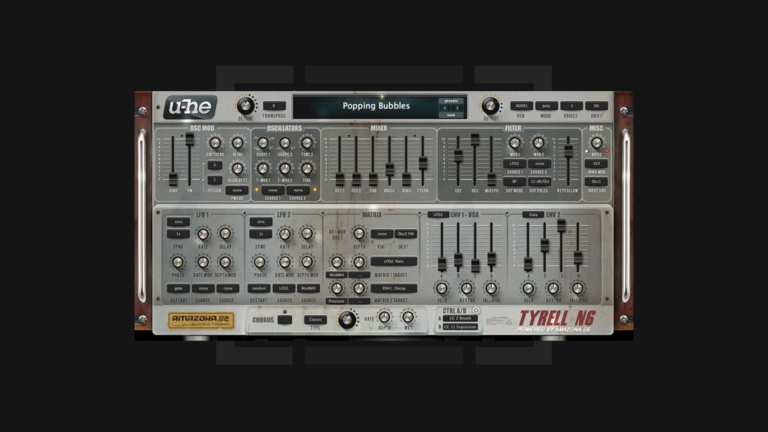
If your main goal is general-purpose synthesis rather than a string-machine texture, our free u-he Tyrell N6 guide covers a different virtual-analogue architecture with deeper oscillator and filter programming. Neither product is universally better: they serve different sound-design goals.
Cheeze Machine 2 installation and troubleshooting
The download page shows a price even though the plugin is free
2getheraudio’s legacy product page identifies Cheeze Machine 2 as free but still contains older commerce and trial widgets. For the advertised free instrument, use the dedicated Cheeze Machine 2 Free form or ask the manufacturer about accessing it through the current account system. Don’t pay for PRO by mistake.
The free-download form asks for an email address
The manufacturer’s form states that it sends download links by email and subscribes the address to 2getheraudio messages, with an unsubscribe option. Review that notice before submitting. If you prefer not to use the form, contact official support rather than relying on an unauthorised mirror.
I already owned Cheeze Machine but can’t access updates
The current support instructions explain that existing 2getheraudio account emails were moved to inMusic Profiles. Use the appropriate account sign-in or password reset and check My Software in the inMusic Software Center. Do not make a new purchase just because an old login doesn’t work.
The plug-in isn’t detected in my DAW
Confirm that the correct VST3, VST2, AU or AAX format was installed and that your DAW actually supports it. Make sure you are searching the instrument list, not only audio effects. Rescan plug-ins, restart the host, and test a blank project before changing an existing session.
Can I run it natively on an Apple Silicon Mac?
2getheraudio lists Cheeze Machine 2 1.1.5 as supported on Apple Silicon in its macOS 26 Tahoe matrix. That is a statement about the manufacturer’s tested updated version, not about every old installer found online. Use the current official process and test your actual DAW.
Does Cheeze Machine work without the internet?
The modern download and authorisation process requires internet according to 2getheraudio support. Don’t assume an offline installation or unlimited offline reauthorisation is available merely because an older review says no internet connection is ever needed. Ask the developer about your specific offline workflow.
Why does a patch feel too wide or cloudy?
Reduce ensemble, phaser or convolution reverb and compare the dry patch at the same level. Shorten the release envelope if multiple chords overlap. Check for low-frequency build-up and listen in mono before changing everything else.
Can I load the presets from Cheeze Machine PRO?
Don’t assume a PRO soundset will be fully compatible with the free instrument. PRO has additional synthesis features and a separate product identity. Use presets specifically supplied for Cheeze Machine 2 unless the developer confirms interchangeability.
Frequently asked questions
Is Cheeze Machine 2 really free in 2026?
The manufacturer’s product and free-download pages advertise Cheeze Machine 2 as free. The current update and authorisation process involves inMusic software management, and some legacy site components still show prices. Check that you are getting the free version rather than PRO.
What instruments can Cheeze Machine 2 make?
It is designed primarily for synthesized vintage string-machine sounds. Its factory sounds also include brass-like, pad, keyboard and bass textures, but that does not make it a sample-based orchestral library.
Does Cheeze Machine 2 have VST3 support?
Yes. The manufacturer’s current macOS compatibility table lists VST2 and VST3 for version 1.1.5, plus AU and AAX on supported systems. Use the build and format appropriate for your DAW.
Does it work in Logic Pro?
On compatible macOS systems, the supported AU format can be used in Logic. Confirm installation, validation and authorisation with the current developer package. Older plugin binaries can behave differently on newer systems.
Does it work on Windows 11?
The developer’s 2025 update instructions list Windows 10 and 11 as tested update platforms. Your specific host and format still need to be compatible.
Is there an official Linux version?
We found no official Linux distribution in the current Cheeze Machine 2 product and support pages. Do not rely on a generic Windows/Mac download description as evidence for Linux support.
Does the free version include the PRO synth engine?
No. Cheeze Machine 2 is the free string-machine-focused product; Cheeze Machine PRO is a separate commercial synth with additional features and a larger factory library.
Does Cheeze Machine 2 include an arpeggiator?
The published Cheeze Machine 2 specification emphasises oscillators, envelopes, modulation, chorus, phaser and reverb, not an onboard arpeggiator. If you want rhythmic note patterns, use your DAW’s MIDI sequencer or a compatible MIDI effect rather than assuming a hidden sequencer is included.
Can I use the sounds in music I release?
You can use the plug-in to create music, subject to the licence terms accompanying the installer and any third-party preset content. This does not give permission to resell the plug-in binaries or redistribute another creator’s presets. Refer to the current developer terms for rights details.
Where is the safest Cheeze Machine download?
Use the official Cheeze Machine 2 product page, free request page or inMusic Software Center. Avoid unofficial installers that claim to unlock PRO for free.
Official sources and verification
- 2getheraudio: Cheeze Machine 2 product page, including free status, oscillator/envelope/effects features and historic system requirements.
- 2getheraudio: January 2019 Cheeze Machine 2 launch announcement, with the Big Tick collaboration and original freeware release.
- 2getheraudio: Cheeze Machine 2 Free request form, with email and platform requirements.
- 2getheraudio: downloading, installing and authorising via inMusic, including 2025 updates and host requirements.
- 2getheraudio: macOS 26 Tahoe compatibility matrix, naming Cheeze Machine 2 version 1.1.5 and its tested formats.
- 2getheraudio: Cheeze Machine PRO, for the separate commercial version.
Underground Talent verdict: Cheeze Machine 2 remains a worthwhile free source of classic electronic string textures. Its greatest strength is a focused, immediate ensemble sound; its biggest practical complication for new readers is navigating the older free download interface alongside the newer account-based activation system. Download from the developer, verify the correct version, and use the synth for what it does best: characterful chords and moving pads that support your music.